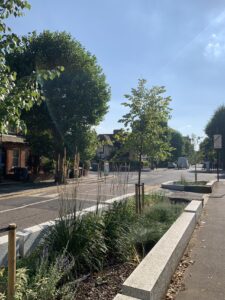
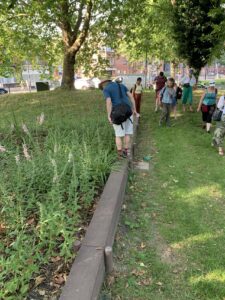
We'd be interested to hear about your projects and ideas, do get in touch.
 ETLA Home Page
ETLA Home Page
ETLA Home Page
In the face of the intersecting crises of housing, biodiversity, and climate change challenges, natural environment professionals are driven to maximise the impact of their work.
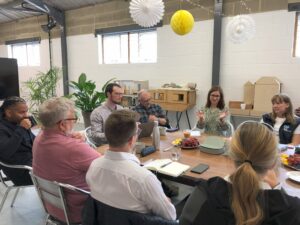
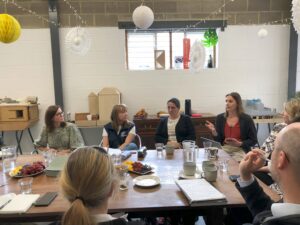
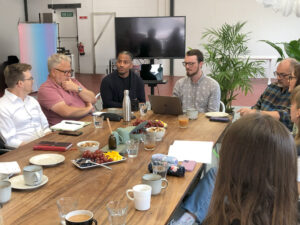
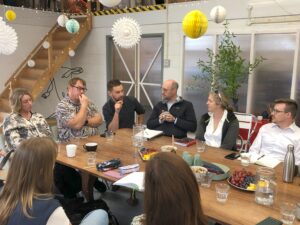
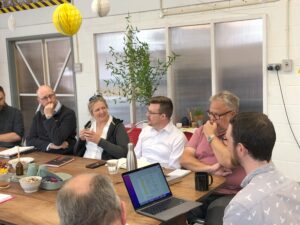
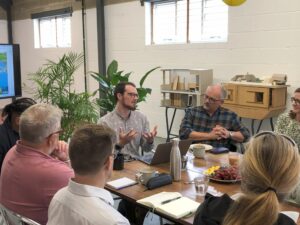
With this in mind, the second of EDLA’s Kent-focused BNG in Practice Roundtable, in collaboration with Design South East, took place this morning with intense and productive conversations.
As professionals from private practice, public sector, and charity sectors, our goal is to move beyond a metrics-based approach and gain a deeper understanding of how to implement BNG for maximum impact in new development schemes. Our conversations will continue regularly to share experiences and best practices. Thank you to everyone for a lively conversation this morning.
Click here to read more about our Recommendations on BNG In Practice after 6 months in effect.
On 8th July 2024, EDLA sponsored and hosted a roundtable discussion in Canterbury, facilitated by Design South East. This event brought together natural environment professionals from the public, private, and charity sectors working across Kent and Medway to reflect on the practical implementation of Biodiversity Net Gain (BNG) metric and its effectiveness in delivering positive outcomes for both nature and people.
The BNG Metric is largely fit for purpose and there are best practice examples of it in use. However, applying the Metric without considering other important landscape, tree and ecology considerations can lead to inappropriate outcomes for ecology and people, and reduced ambition in landscape design. In some development projects, meeting the 10% BNG threshold has meant restricting people from habitats, reducing opportunities for recreation and nature connection, contrary to best practice in landscape design. Local Plans and development industry practices have not all caught up with BNG requirements, sometimes leading to viability challenges and sub-optimal outcomes for BNG.
The roundtable concluded with a comprehensive set of recommendations aimed at improving the BNG Metric guidance and its application on development sites. These recommendations are designed to maximise the potential of this important tool, ensuring it contributes meaningfully to both ecological sustainability and quality of life.
Our key recommendations (provided below) focus on:
(Photo by S N Pattenden on Unsplash)
EDLA sponsored and hosted a roundtable discussion on the BNG Metric facilitated by Design South East.
The roundtable was initiated by Director Eleanor Trenfield, following her presentation at the Kent Design Conference, where she advocated for a deeper understanding beyond mere metrics to ensure long-term impact and better quality of design for both residents and wildlife. She highlighted some of the unintended consequences emerging through the BNG Metric:
– Favouring simpler habitats
– Fencing off high condition habitats
– Disconnecting people from nature
– Encroaching on essential features like drainage basins
– Viability challenges for smaller developments
The conference presentation sparked interesting debate and a clear realisation that we need to do more to facilitate understanding and collaborative thinking on a wider strategic level.
Off the back of this, EDLA and DSE have brought together a collaborative group of Kent -focused natural environment professionals from the public, private, and charity sectors working in Kent and Medway to reflect on how the Metric is working in practice and its effectiveness in delivering positive outcomes for nature and people.
The insightful discussions and experience-sharing concluded with an initial set of recommendations for improving the BNG Metric and its real-life applications. This will help maximise the potential of this important tool, moving beyond ‘design by spreadsheet’ to a landscape and design-led approach.
Our next steps will be publishing the recommendations, for us to use as discussion points with Natural England/DEFRA on the use of the Metric to achieve successful development, landscape design, and habitat outcomes. The roundtable will reconvene in the coming months for further knowledge sharing and discussions.
We would like to thank all who contributed.
Update: Recommendations to Improve the Use of Biodiversity Net Gain in Practice have been published and shared with the Landscape Institute and Natural England.
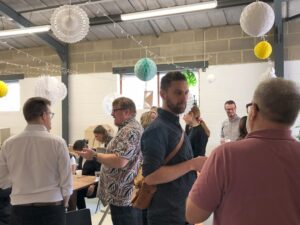
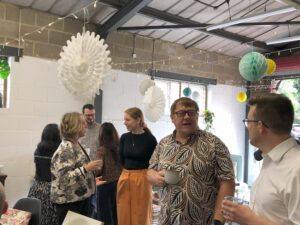
Gender plays an important role in how people access and enjoy the public realm, and inclusivity is a crucial consideration in our landscape designs. Last week, the EDLA team attended a CPD session with Susannah Walker, founder of the charity Make Space for Girls, which campaigns for parks and public spaces to be designed with teenage girls in mind.
The session highlighted how parks and play areas for teenagers are predominantly built with boys in mind, resulting in lower mental and physical health outcomes for teenage girls as they feel unwelcome in these spaces. By the age of 8, boys already start to outnumber girls in public spaces.
The vast majority of facilities for teenagers consist of skateparks, BMX tracks, or MUGAs (Multi-Use Games Areas):
– 92% of teenagers using MUGAs are boys.
– Only 10% of 8-18 year olds skateboard, and of that, 85% are male.
– In a study of 91 councils, there were 1,060 MUGAs, 366 skateparks, and 89 BMX tracks, compared to only 112 shelters and 53 other facilities.
These statistics are striking and emphasize the need for more inclusive public spaces.
And, what do girls want? Make Space for Girls teams went to great lengths seeking girls’ opinions because their voices are not heard even when studies are conducted with “park users” (girls are excluded as you will not readily find them at the parks).
Girls just wanna have FUNdamental changes to parks to public spaces:
Photo by Bewakoof.com Official on Unsplash
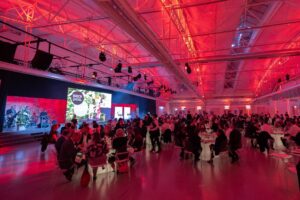
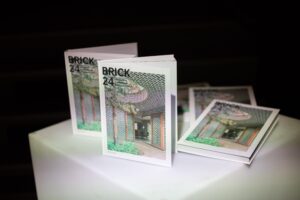
In June, Director Eleanor Trenfield co-hosted the prestigious Brick Award by Wienerberger along with Kristofer Robert Adelaide.
There were numerous innovative projects that it must have been challenging for the jury (Christelle Avenier, Christine Conix, Wojciech Malecki, Boonserm Premthada, Ingrid van der Heijden) to decide on the winners.
Grand Prize Winner and Sharing Public Spaces category winner was International Rugby Experience in Limerick, Ireland by NIALL MCLAUGHLIN ARCHITECTS LTD, described as a cathedral of sport. The building was designed with great attention to materials, using nearly half a million bricks, mixed to achieve the appropriate colour tone to match the neighbourhood. Even the building dimensions were tailored to the brick size to minimise waste.
The Feeling at Home category winner was the Intermediate House, built around an existing mango tree in a long and narrow plot between two structures, from air-dried compressed earth blocks compressed on site, significantly reducing CO2 emissions and with innovative heat-mitigation methods fit for Paraguay’s climate by Equipo de Arquitectura.
Electricity Supply Board HQ, Dublin was the Working Together category winner, designed by Grafton Architects & O’Mahony Pike Architects. It’s a city block with a brick crust and a soft landscaped interior. In place of the 18th century Georgian brick houses that have vanished, the architects combined craft and traditional technology with contemporary technology, repairing the fabric of the city. The team, studying Georgian architecture, translated 18th century ideas of landscape and buildings, weaving landscape through the city block. The result is interlaced courtyards and gardens and terraces right up to the roof level, providing natural light and ventilation within the large block.
Types of Spaces, a temporary public pavilion by architects HANGHAR and Palma Arch, was the winner of the Building Outside the Box category. It was a sequence of six strictly geometric spatial structures, made entirely of thermal bricks, that fits between the walls of adjacent houses and to provide a special experience away from the busy streets within the framework of Concéntrico, a festival taking place in Logroño, Spain to encourage people to consciously experience the city. Visitors immersed themselves in a world that sharpens perception: of space, light, air and permeability, of progress and rest, of the static uniformity of brick walls. In contrast to the perfectly constructed walls was the floor, covered in brick chips, contributing to the variety of sensory sensations: walking requires attention and slowness.
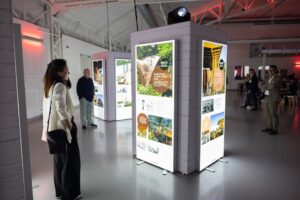
Good landscape design is not just about creating visually appealing spaces for developments—it’s a collaborative process aimed at fostering resilience and promoting harmony between people and nature.
The Biodiversity Net Gain (BNG) legislation is a strong nudge towards creating rich and varied habitats within our built environment. While some UK developers have been future proofing for the expected BNG regulations for years, with the mandatory 10% BNG requirement as of 12 February 2024, now every development MUST demonstrate biodiversity gain, where richer and more varied habitats must be weaved into projects.
Landscape architecture plays a multifaceted role in achieving this, encompassing a thorough understanding of a site’s environmental complexities, its diverse ecosystems, and responding with innovative solutions to create places where both people and nature thrive.
At EDLA, we have been working closely with our clients and ecologists to not only retain existing biodiversity but also enhance and create new habitats, maximising space for people and nature to coexist in a sustainable way.
Here are 10 of our top tips to achieve BNG requirements for developers:
There are numerous stakeholders to each development project, with BNG in full effect, ecologists bring crucial insights to the table, and we recommend allowing sufficient time and budget within projects to allow for landscape architects and ecologists to work together to undertake early stage scenario testing.
Before embarking on design, conduct thorough ecology and habitat surveys to establish a foundation for informed decision-making. Baseline surveys are critical to understand the existing conditions of a site before any development begins. They provide valuable insights into the site’s ecological features, habitat types, vegetation, topography, and existing land uses. These surveys help identify important ecological resources, ensure compliance with regulations, assess environmental risks, and establish a baseline for monitoring and evaluation. By documenting the site’s current conditions, ecologists and landscape architects can make informed design decisions, protect valuable resources, and track changes over time to achieve sustainable outcomes for development projects.
If you are taking the route of an Outline Application, it’s essential to be mindful of the details that will need to be considered later on. By laying a strong foundation at this stage, you can streamline the planning process and ensure that key considerations are addressed effectively as the project progresses through detailed design, avoiding proposing parameters and habitats that may not actually be feasible.
Recognise that achieving BNG is an iterative process. Work closely with landscape architects and ecologists to streamline workflows and allow for sufficient time in the project programme to test different options and ideas.
Selecting an ecologist based on their experience and skills is a crucial step. Work with ecologists that intimately understand the Metric and have a wealth of experience, whilst their fees may be higher, their expertise will save you time and expense in the long run.
Be prepared to navigate the complexities that may arise between visual mitigation, landscape character enhancement, and green infrastructure design. Embrace these diverse considerations as opportunities for innovation and growth.
BNG is a journey, not a roadside attraction. Landowners are legally responsible for creating or enhancing habitat and managing that habitat for at least 30 years. Work with your landscape architects and ecologists to develop robust management plans to sustain biodiversity enhancements over a minimum of 30 years.
Integrate climate-resilient green infrastructure to create interconnected networks that benefit both wildlife and communities, fostering a deeper connection to nature.
Ensure that what is being proposed within planting plans is widely available, and that the sizes that are being proposed can be sourced in a practical manner. Mature tree stock with large canopies may offer more points within the Metric, but they are logistically challenging to transport to high density urban site locations and are at much higher risk of failure than trees which are younger.
Involve local communities in the development process to garner support and enhance awareness about the significance of biodiversity. Organize workshops, or public forums to foster a sense of ownership and responsibility towards biodiversity conservation. By engaging with stakeholders, including residents, schools, and community groups, you can build a collective commitment to nurturing and protecting biodiversity within the development project and its surrounding areas.
Biodiversity Net Gain offers a transformative opportunity to create landscapes where both people and nature thrive. As EDLA landscape architects, we stand as an experienced partner to create viable projects that contribute to a more sustainable and biodiverse future for generations to come.
Ready to start creating sustainable and biodiverse landscapes for your development projects?
Contact us today to discuss how our experienced team at EDLA can help you achieve your Biodiversity Net Gain goals and bring your project to life!
By Eleanor Trenfield
Founder and Director, EDLA Landscape Architects
Achieving 10% Biodiversity Net Gain within development became mandatory on the 12th of February, however this is not a new concept to the industry, and many of our clients have been working towards this (and in some cases a self-imposed 20% BNG) for years. So, we offer extensive experience to draw from, working closely with the ecologist and client.
Biodiversity Net Gain offers a transformative opportunity to create landscapes where both people and nature thrive. It is an environmental game changer, or at least it has the potential to be. The notion is simple; retain existing habitats as far as possible, enhance, and / or create new habitats so that overall, there is a net improvement to biodiversity of 10%. We fully support the concept of BNG, however, the Metric in its current iteration is highly complex and resulting in some questionable outcomes. It is also penalising ambition. It is calculated through a comprehensive spreadsheet, requiring inputs from experienced and competent ecologists.
So how do landscape architects fit into this?
Good landscape design is not just about creating visually appealing spaces for developments—it’s a collaborative process aimed at fostering resilience and promoting harmony between people and nature.
As landscape architects, we stand as an experienced partner to create viable projects that contribute to a more sustainable and biodiverse future for generations to come. We model scenarios with the ecologist, inputting at an early stage into the appropriateness (or not) of particular habitats from a design and placemaking perspective, and ensuring that the required areas are accommodated into the design. We also create or input into the Landscape and Biodiversity Management Plans (the management period required is 30 years).
BNG is adding to the myriad of uncertainties and complexities in projects, and our team is attending conferences and seminars regularly to discuss the many questions are clients and design teams are faced with. Natural England recently said in a seminar we attended that ‘BNG should be used to guide to design, not dictate design’, but is this a realistic position if it is a mandatory requirement in Planning?
We are seeing that strategic and larger sites are achieving BNG relatively easily in many cases, however, smaller sites (under 50 units) are finding this far more challenging. The smaller sites are also unlikely to have allocated budgets to do the early scenario testing that we would recommend. Developers are increasingly looking to land banks which add to the costs of a scheme significantly, and may not have been factored in when looking into viabilities, or they are being advised to reduce unit numbers, which may also result in the scheme becoming unviable.
Where BNG is being incorporated on site, there is an obvious pressure to achieve maximum points, where we see some (not all) ecologists proposing habitats that would be inappropriate for the location, or equally unfortunate, fencing them off to achieve maximum condition, effectively preventing people from accessing the landscape and interacting with nature within these habitats. ‘Irreplaceable habitats’ such as Ancient Woodlands which could benefit from long term management as part of a planning application are being excluded from red line boundaries as it is too difficult to achieve 10% BNG within an irreplaceable habitat, despite the significant obvious benefits to nature that a long term management plan would bring. Many of the ecologists we are working with are equally frustrated that design quality is being reduced to a paint by numbers approach where the most appropriate habitats are not the ones that score highest. And we are seeing a tension between what would achieve maximum points from a BNG perspective, versus what would be appropriate from a landscape / visual mitigation perspective / green infrastructure planning. For example the project may benefit from a new area of woodland for visual mitigation, however in order to achieve BNG, the area is required to be categorised as grassland with scattered trees, which may not suitably address visual impact.
Despite the frustrations we have with the Metric tool in these early days, we are in no doubt that Biodiversity Net Gain will be immensely positive and transformative for our industry and the landscape. We just need to iron out some of the glitches in the Metric…
To aid our clients, we have put together 10 Top Tips for Harnessing Landscape Architecture in Development Projects. From cultivating collaboration between ecologists and landscape architects to championing connectivity and community engagement, our top tips offer practical guidance for developers seeking to enhance biodiversity within their projects.
Please do get in touch if you would like to discuss your proposals.
Our people are everything. And that is why in this new monthly series, we will be asking each team member to explain what motivates and inspires them and what they do when they are not working.
We kick off with one of our Directors Donald Roberts.
Donald is passionate about advancing the quality of landscape schemes, a commitment reflected in his contribution to several high-quality built-to-rent projects, including the award-winning Wembley masterplan.
The landscape often serves as the common thread connecting various design disciplines within the built environment, and he thrives on coordinating these elements for project success. His dedication to continuous learning is evident in study trips and research focused on landscapes, such as exploring healthy streets and self-build landscapes in the Netherlands. Also visits with Ebbsfleet Development Corporation, enhancing his ability to contribute to future projects. This passion for learning is also evidenced by his completion of a second degree in Law, complementing his postgraduate qualifications in Theology and initial and postgraduate degrees in Landscape Architecture from Kingston University. Donald’s industry knowledge and intuitive understanding of landscape and design set his projects apart.
Clients and planners have praised some of his recent design work, stating that it “sets a new standard in design excellence.”
Donald explains: “I push myself to ensure our work is considered and exceptional, which is why Eleanor and I are so aligned; we both have extremely high standards for our clients.”

Official Credentials:
Additional role: Senior Landscape Design Manager, London Legacy Development Corporation (LLDC) (Contract). The LLDC is the Mayor of London’s development corporation for Queen Elizabeth Olympic Park and the surrounding areas.
Previous experience: Head of Landscape and Urban Design at Assael Architecture, PRP and Churchman Landscape Architects. He is an expert member of the Design Council, Panel member of Design South East and Associate Lecturer at the University of Creative Arts.
Streets play an active role in promoting health and wellbeing through walking, cycling, play and high-quality green space. Cities worldwide are prioritising the integration of environmental and sociability considerations into urban design. There are significant benefits for the communities that use streets as urban space and tackle issues such as childhood obesity and safer spaces for all. This shift has led to the development of indices, such as those focusing on the health of city streets, shedding light on the impact of traffic intensity on various aspects of urban life and the use of natural capital accounts.
Historically the urbanisation of streets contributed to a disconnect between people and urban spaces, with a preference for personal vehicles over healthier alternatives. Major roads, in particular, lead to cognitive and social disengagement, resulting in diminished air quality, noise pollution, and a loss of much-needed green spaces. The promotion of healthier streets in the context of urbanisation and the increasing shift to higher density living, however, does have its challenges when vehicular modes of travel have been prioritised and community needs not adequately considered to move away from the dominance of the car.
Urban streets then must move away from being transient spaces, lacking opportunities for liveliness, social engagement, and informal exchange and must encourage safe and accessible street use, opportunities for social interaction and mixing are crucial. The role of active travel in daily routines can play a significant role. And investing in walking and cycling can significantly contribute to local economic development.
Key Active Travel Initiatives
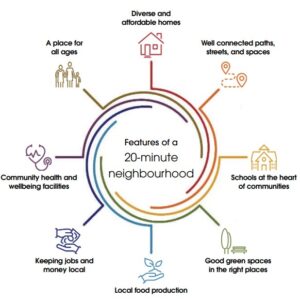
The 20 Minute Neighbourhood: Local authorities have a part to play in achieving this and The Town and Country Planning Association advocate for the influence of urban planning on community health.
The establishment of ‘complete, compact, and connected’ neighbourhoods, commonly known as 20-minute neighbourhoods, has been proven to result in healthier living spaces and streets while contributing to climate targets.
By encouraging mixed-use developments and accessible public spaces, the 20-minute neighbourhood not only promotes healthier lifestyles through increased physical activity but also addresses environmental sustainability and social cohesion.
Similarly, Sustrans also advocate for walking and cycling schemes, and cover important aspects such as the economic case, housing growth, and planning, as well as health resources.
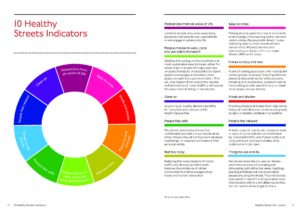
The benefits of good street design:
Effective street design, particularly with the inclusion of trees, can yield numerous benefits. This is achieved not only by slowing down cars but also by enhancing air quality, moderating energy usage, and contributing to the overall well-being of residents. Promoting slower traffic is linked to a reduction in accidents, alleviated congestion, decreased parking pressure, and increased levels of walking and cycling for daily journeys, fostering safer and healthier urban centres and contributing to substantial cost savings for the NHS and healthcare. Designing streets with flexibility to accommodate various uses, such as pocket parks, outdoor dining areas, and community activities accessible by walking and cycling, aligns with the current trend of staying local. Fostering a local identity in streets, making them distinctive, not only aids navigation but also nurtures a sense of community and civic pride.
We are very interested to hear that Stockholm has just opened its first fietsstraat (cycle street). A fietsstraat is designed as a bicycle route on which cars are also allowed. As the bicycle is the preferred mode of transport, cars are guests on these cycle streets. We will be watching this initaive with interest.
Case Study: Alkerden, Ebbsfleet
Our project in Alkerden, Ebbsfleet, effectively embodies these principles. Rather than adhering to the original scheme proposals allowing unrestricted vehicle access through the site’s centre, we envisioned this space as an edible and ecological spine. This innovative concept allowed us to halve vehicle access along the central spine, transforming it into an urban linear park.
This redesign provides safe streets for walking, cycling, and recreational activities, lined with trees and orchards, fostering a relaxing environment for residents to unwind and connect with one another.
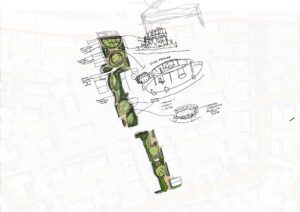
Additionally, we seamlessly integrated the wider public realm, establishing crucial links that enhance the user experience, offering picturesque views of the lake and chalk cliffs. This design aligns with the principles of providing healthy active streets and clear legible connections and creating environments that support well-being.
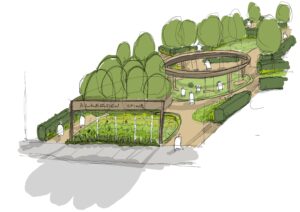
Our approach to designing well connected communities:
As landscape architects, we advocate for the transformation of urban environments to promote healthier living. Our projects are guided by these principles, embodying the shift towards active and well-connected communities.
The success of initiatives like the 20-minute neighbourhood and the London Healthy Street initiative inspires this approach. Our projects including Orchard Farm KentOrchard Farm, Kent – WLA Award and LI Award shortlisted, and Alkerden Ebbsfleet demonstrate the impactful role of landscape architecture in creating healthy active, and community-centric spaces. By prioritising healthy streets and places, clear connections, green infrastructure, and the well-being of residents early in the project process, projects can characterise the essence of healthier streets and significantly contribute to the evolution of urban spaces.
Next Page »« Previous Page