
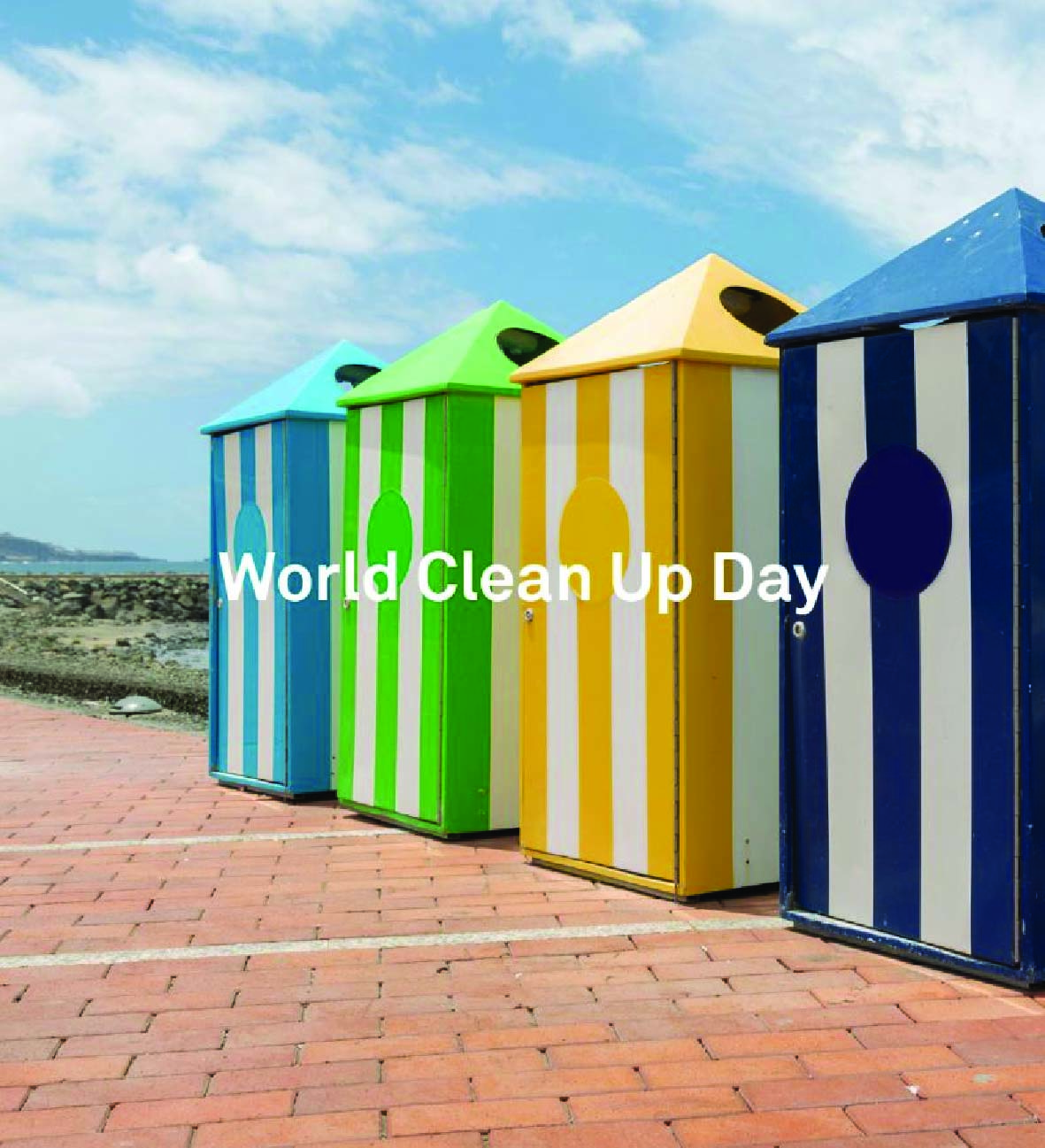
World Cleanup Day
World Cleanup Day feels like a good time to talk about one of the less glamorous parts of landscape architecture.
Bins.
Stay with us.
We spend a lot of time thinking about the bigger picture: how people move through places, how nature is integrated into towns and cities, how green infrastructure performs, and how landscapes can support healthier, more resilient communities.
But successful public realm also depends on some decidedly less exciting details. And bin placement is one of them.
Research in England suggests convenience makes a real difference. The Government’s Litter Strategy for England notes that around one in four people who litter attribute their behaviour, at least partly, to a real or perceived lack of bins. Observational research has also found that littering increases as the distance to a bin increases.
Disneyland provides an interesting, if often oversimplified, example. It’s frequently associated with the idea of placing bins roughly 30 feet apart, reportedly based on observations of how far visitors would carry rubbish before disposing of it.
The exact origin of the rule is difficult to verify, and 9 metres certainly isn’t a magic number. But the principle behind it is useful.
In a busy environment where people are eating, drinking, queuing and moving between destinations, waste infrastructure needs to respond to how the place is actually used. It’s not simply about providing enough bins; it’s about putting them where people naturally need them.
That’s a small detail with a wider relevance to landscape architecture. Understanding movement, dwell points, patterns of use and likely behaviours can help make responsible choices easier rather than relying on signage or good intentions alone.
It also means thinking about bins as part of the public realm, rather than something added once everything else has been designed. Location, visibility, accessibility and capacity matter. So do ownership, servicing and maintenance.
Because even the most thoughtfully positioned bin isn’t much use if it’s overflowing.
For us, it comes back to four things: designing for nature, for people, for longevity and for stewardship.
A well-designed landscape isn’t finished when it’s built. It succeeds when people can continue to use it, value it and care for it.
Sometimes the details that matter most are the ones nobody really notices. Even the bins.