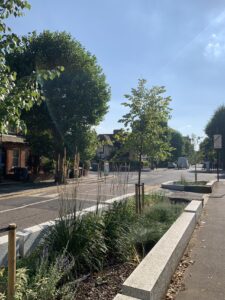
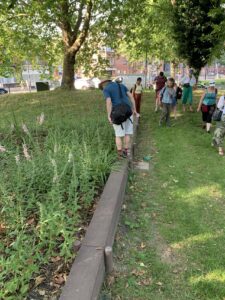
We'd be interested to hear about your projects and ideas, do get in touch.
 ETLA Home Page
ETLA Home Page
ETLA Home Page
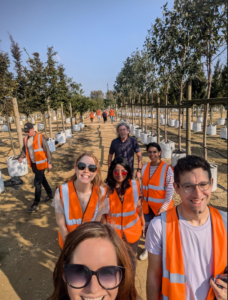
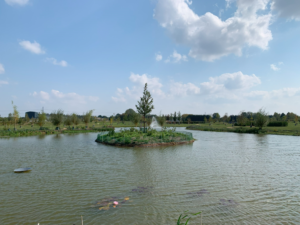
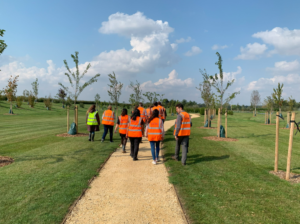
Last week, EDLA team took advantage of a sunny day and visited Barcham Trees PLC as part of our ongoing commitment to professional development.
The day was a deep dive into the complexities of tree selection and how choosing the right species contributes to resilient and sustainable landscapes.
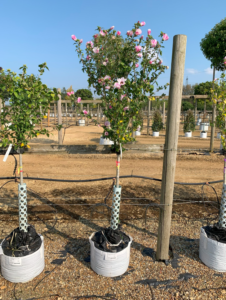
– Species Selection – Some species are often overlooked despite their adaptability. Underappreciated species like the Hungarian Oak (Quercus frainetto), Japanese Pagoda Tree (Styphnolobium japonicum), Silver Lime (Tilia tomentosa), and Swamp Cypress (Taxodium distichum) offer unique tolerances to various conditions and deserve more attention in our designs.
– Container-grown trees can be convenient but come with challenges. Proper root shaving before planting is crucial to avoid kinks that can affect the tree’s lateral stability at maturity.
– Root ball and bare-root trees have distinct advantages and disadvantages, and selecting the right type for each project is critical.
– Sustainability at the core – Working with reputable nurseries ensures long-term viability.
Team refreshers like these are invaluable, providing a space to discuss ideas and share knowledge away from our desks and deadlines.
In the face of the intersecting crises of housing, biodiversity, and climate change challenges, natural environment professionals are driven to maximise the impact of their work.
With this in mind, the second of EDLA’s Kent-focused BNG in Practice Roundtable, in collaboration with Design South East, took place this morning with intense and productive conversations.
As professionals from private practice, public sector, and charity sectors, our goal is to move beyond a metrics-based approach and gain a deeper understanding of how to implement BNG for maximum impact in new development schemes. Our conversations will continue regularly to share experiences and best practices. Thank you to everyone for a lively conversation this morning.
Click here to read more about our Recommendations on BNG In Practice after 6 months in effect.
On 8th July 2024, EDLA sponsored and hosted a roundtable discussion in Canterbury, facilitated by Design South East. This event brought together natural environment professionals from the public, private, and charity sectors working across Kent and Medway to reflect on the practical implementation of Biodiversity Net Gain (BNG) metric and its effectiveness in delivering positive outcomes for both nature and people.
The BNG Metric is largely fit for purpose and there are best practice examples of it in use. However, applying the Metric without considering other important landscape, tree and ecology considerations can lead to inappropriate outcomes for ecology and people, and reduced ambition in landscape design. In some development projects, meeting the 10% BNG threshold has meant restricting people from habitats, reducing opportunities for recreation and nature connection, contrary to best practice in landscape design. Local Plans and development industry practices have not all caught up with BNG requirements, sometimes leading to viability challenges and sub-optimal outcomes for BNG.
The roundtable concluded with a comprehensive set of recommendations aimed at improving the BNG Metric guidance and its application on development sites. These recommendations are designed to maximise the potential of this important tool, ensuring it contributes meaningfully to both ecological sustainability and quality of life.
Our key recommendations (provided below) focus on:
(Photo by S N Pattenden on Unsplash)
EDLA sponsored and hosted a roundtable discussion on the BNG Metric facilitated by Design South East.
The roundtable was initiated by Director Eleanor Trenfield, following her presentation at the Kent Design Conference, where she advocated for a deeper understanding beyond mere metrics to ensure long-term impact and better quality of design for both residents and wildlife. She highlighted some of the unintended consequences emerging through the BNG Metric:
– Favouring simpler habitats
– Fencing off high condition habitats
– Disconnecting people from nature
– Encroaching on essential features like drainage basins
– Viability challenges for smaller developments
The conference presentation sparked interesting debate and a clear realisation that we need to do more to facilitate understanding and collaborative thinking on a wider strategic level.
Off the back of this, EDLA and DSE have brought together a collaborative group of Kent -focused natural environment professionals from the public, private, and charity sectors working in Kent and Medway to reflect on how the Metric is working in practice and its effectiveness in delivering positive outcomes for nature and people.
The insightful discussions and experience-sharing concluded with an initial set of recommendations for improving the BNG Metric and its real-life applications. This will help maximise the potential of this important tool, moving beyond ‘design by spreadsheet’ to a landscape and design-led approach.
Our next steps will be publishing the recommendations, for us to use as discussion points with Natural England/DEFRA on the use of the Metric to achieve successful development, landscape design, and habitat outcomes. The roundtable will reconvene in the coming months for further knowledge sharing and discussions.
We would like to thank all who contributed.
Update: Recommendations to Improve the Use of Biodiversity Net Gain in Practice have been published and shared with the Landscape Institute and Natural England.
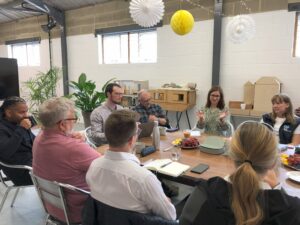
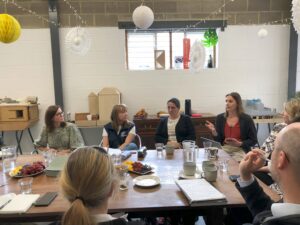
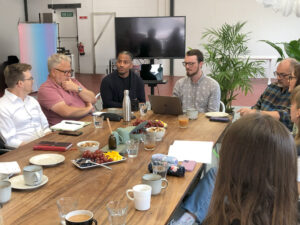
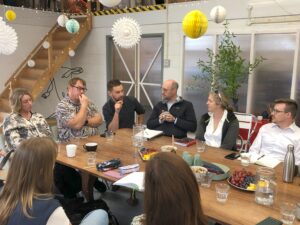
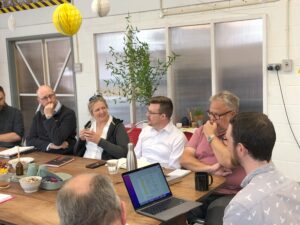
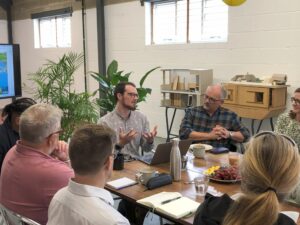
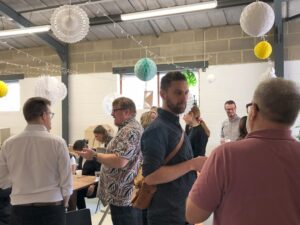
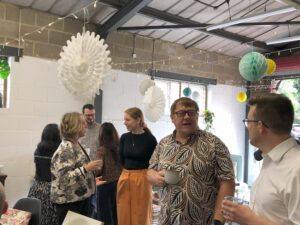
Gender plays an important role in how people access and enjoy the public realm, and inclusivity is a crucial consideration in our landscape designs. Last week, the EDLA team attended a CPD session with Susannah Walker, founder of the charity Make Space for Girls, which campaigns for parks and public spaces to be designed with teenage girls in mind.
The session highlighted how parks and play areas for teenagers are predominantly built with boys in mind, resulting in lower mental and physical health outcomes for teenage girls as they feel unwelcome in these spaces. By the age of 8, boys already start to outnumber girls in public spaces.
The vast majority of facilities for teenagers consist of skateparks, BMX tracks, or MUGAs (Multi-Use Games Areas):
– 92% of teenagers using MUGAs are boys.
– Only 10% of 8-18 year olds skateboard, and of that, 85% are male.
– In a study of 91 councils, there were 1,060 MUGAs, 366 skateparks, and 89 BMX tracks, compared to only 112 shelters and 53 other facilities.
These statistics are striking and emphasize the need for more inclusive public spaces.
And, what do girls want? Make Space for Girls teams went to great lengths seeking girls’ opinions because their voices are not heard even when studies are conducted with “park users” (girls are excluded as you will not readily find them at the parks).
Girls just wanna have FUNdamental changes to parks to public spaces:
Photo by Bewakoof.com Official on Unsplash
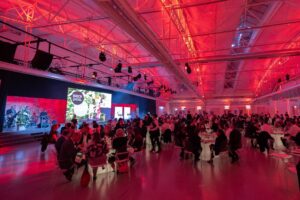
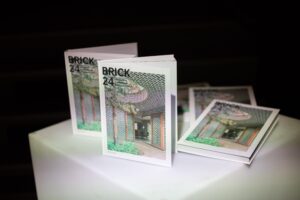
In June, Director Eleanor Trenfield co-hosted the prestigious Brick Award by Wienerberger along with Kristofer Robert Adelaide.
There were numerous innovative projects that it must have been challenging for the jury (Christelle Avenier, Christine Conix, Wojciech Malecki, Boonserm Premthada, Ingrid van der Heijden) to decide on the winners.
Grand Prize Winner and Sharing Public Spaces category winner was International Rugby Experience in Limerick, Ireland by NIALL MCLAUGHLIN ARCHITECTS LTD, described as a cathedral of sport. The building was designed with great attention to materials, using nearly half a million bricks, mixed to achieve the appropriate colour tone to match the neighbourhood. Even the building dimensions were tailored to the brick size to minimise waste.
The Feeling at Home category winner was the Intermediate House, built around an existing mango tree in a long and narrow plot between two structures, from air-dried compressed earth blocks compressed on site, significantly reducing CO2 emissions and with innovative heat-mitigation methods fit for Paraguay’s climate by Equipo de Arquitectura.
Electricity Supply Board HQ, Dublin was the Working Together category winner, designed by Grafton Architects & O’Mahony Pike Architects. It’s a city block with a brick crust and a soft landscaped interior. In place of the 18th century Georgian brick houses that have vanished, the architects combined craft and traditional technology with contemporary technology, repairing the fabric of the city. The team, studying Georgian architecture, translated 18th century ideas of landscape and buildings, weaving landscape through the city block. The result is interlaced courtyards and gardens and terraces right up to the roof level, providing natural light and ventilation within the large block.
Types of Spaces, a temporary public pavilion by architects HANGHAR and Palma Arch, was the winner of the Building Outside the Box category. It was a sequence of six strictly geometric spatial structures, made entirely of thermal bricks, that fits between the walls of adjacent houses and to provide a special experience away from the busy streets within the framework of Concéntrico, a festival taking place in Logroño, Spain to encourage people to consciously experience the city. Visitors immersed themselves in a world that sharpens perception: of space, light, air and permeability, of progress and rest, of the static uniformity of brick walls. In contrast to the perfectly constructed walls was the floor, covered in brick chips, contributing to the variety of sensory sensations: walking requires attention and slowness.
Our team is growing, join us!
We are a boutique landscape studio, committed to the highest quality of landscape planning, design and the environment. Our work is stimulating and varied, from beautiful homes in the countryside to a wave park, to the regeneration of a contaminated historic rail yard site, to large strategic mixed use schemes including country parks.
This offers fantastic opportunities for you and your career, in a company that allows you the space to make your mark. We have previously worked with external BNG consultants/ecologists but are now bringing the role in house to be part of the team, to streamline the BNG process for our clients and to truly deliver value to nature and biodiversity within our projects.
We envisage you bringing energy, enthusiasm and attention to detail. You are unafraid to confront the status quo & want to make your mark.
You will have five or more years’ experience across a broad range of assessments for habitats and protected species, and especially if you have the ability to author higher-level reports such as EPS licencing, HRA and ES chapters, including the production of Ecological Impact Assessments.
You will have a very strong grasp of the evolving developments in Biodiversity Net Gain and are confident using UK Habs. You will be familiar with best practice standards and legislative drivers that apply to UK habitats and species. You will need to demonstrate that you have experience in undertaking BNG assessments, as well as on/off-site management plans and associated supporting documents to a very high standard.
You will have a specialism in Botany and be competent in the mitigation for one or more of the following species groups; bats, badgers, birds, dormice, great crested newts, reptiles, and water voles.
We are growing and we are looking for talented people who want to grow with us, those who can thrive in a culture which can be pressurised but also dynamic and progressive, and underpinned by quality and integrity, across our work and in our relationships, with each other, our clients, and co-consultants.
We offer a hybrid way of working and give all of our team the autonomy to manage their own work, but you also must enjoy being part of a collaborative team. And to ensure we keep that collaboration fresh; we ask that we have a full team presence in our office in Canterbury at least twice per month.
We pride ourselves on our respectful, inclusive and creative working environment. We value our team; you will be recognised, heard and appreciated.
Skills and personal talents we need:
In return we offer:
A competitive salary, commensurate with experience, and the following additional benefits:
Please get in touch with our Practice Manager Jo at office@edla.co.uk to find out more.
We look forward to meeting you.
Director Eleanor Trenfield presented at the Kent Design Conference on April 30th, a gathering of built environment professionals passionate about shaping the future of Kent and Medway’s landscapes.
During her presentation, Eleanor reflected on Biodiversity Net Gain (BNG) in practice, shedding light on recent experience and advocating for a deeper understanding beyond mere metrics to ensure long-term impact and better quality of design for residents and wildlife. Eleanor raised the point that the metric is leading many sites down the route of creating large areas of simple habitats to achieve maximum scores, not a design that would be sensitive, logical and interesting, using ecotones and thinking of a site in the broader picture of a wider habitat network.
Eleanor highlighted some unintended consequences emerging through the BNG metric, including the pressure to maximise scores by favouring simpler habitats. This trend has led to the fencing off of large areas to create high condition habitat, effectively disconnecting people from nature and encroaching on essential features like drainage basins, which become more engineered and less accessible. Additionally, smaller developments are facing viability challenges, often resulting in disconnected pockets of homogenous habitat that fail to deliver meaningful value on-site.
The presentation sparked valuable discussions on finding better approaches to integrate nature into development sites, paving the way for more in-depth exploration and collaboration and we are exploring opportunities to discuss this in more depth. Updates to follow…
Calling all eco-enthusiasts! Have you checked out our latest BNG-focused newsletter? Step into the latest edition of the Landscape Lens for expert insights, practical tips, and inspiring project updates!
Our featured thought piece explores the complexities of the Metric and the practical challenges encountered by developers, ecologists, and landscape architects. We examine how these stakeholders are traversing the path towards achieving net gains in biodiversity, shedding light on both the opportunities and obstacles along the way.
We’ve also compiled a Top 10 Tips guide for developers striving to meet BNG requirements. Whether you’re just beginning your journey or seeking to optimise your approach, we hope you’ll find this resource valuable for achieving meaningful biodiversity enhancements in a viable manner.
Join us in nurturing green landscapes and vibrant communities. #BNG #SustainableDevelopment #LandscapeArchitecture
Next Page »« Previous Page