

We'd be interested to hear about your projects and ideas, do get in touch.
 ETLA Home Page
ETLA Home Page
ETLA Home Page
Attending the recent NLA Design Code event prompted me to reflect deeply on the evolving role of design codes in shaping our built environment. The discussions reinforced how design codes have evolved to become multifaceted tools, serving varied roles in guiding both urban and rural developments. Increasingly, codes are becoming thematic, focusing in-depth on specific issues such as heritage conservation, streetscape quality, green infrastructure integration, and accommodating public transport and active movement. Integrating these thematic codes with considerations of climate resilience and sustainable design principles presents a powerful opportunity for driving the significant changes required to meet today’s ecological and climate emergencies. With a forthcoming update to the National Model Design Code and the National Design Guide expected soon, there is potential for clearer guidance and stronger frameworks to further embed these critical priorities.
Balancing Specificity and Flexibility
One prominent theme that emerged was the necessity of balancing clarity and specificity in codes with sufficient flexibility to stimulate creativity and innovation. While overly prescriptive codes risk constraining designers and stifling site-specific solutions, codes that establish clear design principles yet remain methodologically adaptable create conditions for sustainable and imaginative outcomes. We need to embrace what some participants described as ‘bagginess’, an organic flexibility consciously built into the codes, to anticipate changes in technology, practice, and sustainability standards over time. Design codes must begin with robust overarching principles, yet remain open and receptive to innovative methods of realising these aspirations as new opportunities emerge.
Rather than viewing design codes as static and restrictive, our guiding principle should position them as dynamic, adaptable frameworks that actively facilitate necessary change. Clearly articulating a guiding vision, design priorities, landscape strategies, and movement considerations, as well as identifying unique character areas reflective of local contexts, sets a strong foundation. With built-in mechanisms for regular review and updating, design codes can allow flexibility to evolve, ensuring that our urban environments remain resilient, relevant, and responsive to future challenges.
The Undeniable Value of Landscape-Led Design
Consistent across inputs from various speakers and case studies was the principle of genuinely landscape-led design coding. While the term “landscape-led” can sometimes seem overused without sufficient clarity or follow-through, strong examples discussed at the session showed how professional, early, and sustained involvement of landscape architects can profoundly shape the framework. Genuine landscape-led approaches deliver tangible environmental, social, economic and wellbeing benefits, influencing how we plan, build, and live within urban developments.
Community engagement continues to underline a persistent public demand for accessible, high-quality green open spaces. These spaces consistently form critical pillars of successful masterplans, underpinning local support for new development. Importantly, well designed landscapes improve communities significantly: enhancing physical and mental health, encouraging active and social lifestyles, reducing stress, improving air quality, and fostering deeper, more meaningful connections to nature.
The Role of Community, Simplicity, and Accessibility
A further critical element discussed extensively was the necessity of closely involving local communities and strengthening the influence of community and expert peer-review panels from early concept stages onward. Codes need to be accessible, intuitive tools, not barriers to understanding. Simple, clear language combined with effective graphic representation not only demystifies the content but empowers local communities, ensuring outcomes are widely understood and accepted. Robust community dialogue helps ensure codes remain responsive to evolving local needs, deepening community engagement and stewardship over time.
Integrating Landscape into Urban Design: Lessons from Earls Court and Staples Corner
The session’s insights from two key London design code projects vividly illustrated the potential and impact of landscape-led coding.
The Earls Court Design Code and Masterplan, for instance, is recognised as one of London’s largest and most influential urban development opportunities. This plan underscores powerful community involvement techniques, shaped through extensive workshops with local stakeholders, borough representatives, heritage specialists, and architects and landscape architects. Crucially, strong landscape principles and explicit commitments to green infrastructure have become guiding threads in the masterplan, helping realise an urban vision that emphasises connectivity, ecological recovery, biodiversity, and culturally enriching public spaces. Green spaces, planned thoughtfully, offer vital community gathering areas, active travel routes, facilities promoting play and recreation suitable for all age groups, alongside spaces for urban agriculture and cultural expression, each serving to enhance social connections and intergenerational interactions.
Similarly, the Staples Corner Design Code developed by the London Borough of Brent showcases how landscape-led approaches can tackle challenges within complex ‘grey belt’ environments dominated by industrial heritage and significant transport infrastructure. Here, fragmented ownership and disconnected public realm spaces posed considerable challenges. Through robust community engagement methods involving local champions, a detailed three part draft code emerged, defining clear streetscape, character identity, and area-wide guidelines to improve clarity and enforceability.
Design Codes as Catalysts for Lasting Change?
Ultimately, the purpose of design codes must move beyond traditional concerns with design guidance toward a proactive, holistic approach capable of addressing critical contemporary issues such as climate change, ecological degradation, and social inequality. High quality outdoor spaces, green infrastructure, accessible routes, and healthy environments must be championed and viewed as fundamental public goods; essential tools for mitigating health inequalities, building social capital, and ensuring urban resilience.
Using design codes as dynamic, enabling frameworks – instead of burdensome or restrictive policy documents can help planners, designers, authorities, and communities collaboratively realise visions of connected, flexible, resilient, and equitable environments.
The link to the presentations can be found here
We design inclusive play areas that cater to children of varying abilities, creating opportunities for social integration and empathy building. Additionally, the mental health benefits of outdoor play—reducing stress and enhancing emotional resilience—are at the forefront of our designs.
Our designs incorporate natural materials and green spaces because we know that time spent in nature improves attention spans and helps children build a connection with the environment. Considering planting within play areas is also important for kids exploring nature as many kids do bug hunts or bug hotels with sticks and leaves along the periphery.
Play spaces also serve as intergenerational hubs, where not just children, but adults and older generations can connect and engage, fostering a stronger community. In our designs, we incorporate six key types of play to foster a wide range of skills, helping children grow, connect, and thrive in safe, natural environments.
Play helps children:
– Build physical and mental well-being,
– Encourage healthy brain development,
– Strengthen creativity, imagination, and problem-solving skills,
– Develop social skills like sharing, collaboration, and communication,
– Build confidence, resiliency, and decision-making,
– Practice overcoming fears and adult roles,
– Explore the outdoors and their senses, learning about the world.
We designed the play area to encourage social, imaginative, and creative play for children of various ages. Using wooden structures, edible landscapes, and planting that connects with the wider site, this space fosters exploration, movement, and interaction. It’s a place where children can develop their physical, cognitive, and social skills while staying connected to nature.

Our play area draws on a range of play types—locomotor, creative, exploratory, and mastery play—designed to keep children engaged and discovering new ways to play every time they visit. With seating for parents and secure, natural surroundings, it’s a safe and stimulating environment for the whole community providing connection between the Primary school and the wider community.

The play equipment with wooden structures will form part of a larger area that will incorporate materials and planting found in other parts of the site, allowing for a feeling of connection and familiarity with the wider site. It allows for children within the site to feel more as if they are within nature, as well as staying in keeping with the overall aesthetics of the development.
Further reading: Play friendly design and sustainability
The spaces we design have a profound impact on the mental well-being of communities. Research consistently highlights the benefits of access to green and blue spaces, which enhance not only physical health but also play a critical role in mental wellness.
Access to nature helps reduce stress, anxiety, and depression, while fostering a sense of connection and emotional balance. Studies have shown that time spent in green environments, such as parks and gardens, or near water bodies like lakes and rivers, can lead to improved mental clarity, better mood regulation, and enhanced cognitive functioning.
At EDLA, we prioritise these benefits in our designs. Our approach ensures that every project integrates nature in ways that benefit both individuals and communities. By enhancing biodiversity and creating accessible spaces for reflection and activity, we help support healthier, happier communities.
Discover more about the connection between mental health and nature in our detailed exploration of the Impact of Green Spaces on Mental Health, a science-backed overview of how landscape architecture can promote wellness.
Director Eleanor Trenfield joined an expert panel at the Implementing Biodiversity Net Gain (BNG) in Construction roundtable sponsored by Biofarm. This insightful gathering brought together industry leaders to discuss the successes and challenges of implementing BNG in the construction sector.
The roundtable was an inspiring opportunity to share EDLA’s perspectives and hear from thought leaders across ecology, construction, and environmental management.
Eleanor highlighted the importance of balancing public space enjoyment with meaningful biodiversity improvements – something we’re passionate about integrating into all our projects. She also raised the fundamental importance of considering BNG at the earliest viability stages and within councils’ site appraisal and selection process when identifying sites for growth in local plans to ensure BNG is thoughtfully and appropriately incorporated into development.
Click here for the white paper and podcast for key takeaways from the session including the role of local planning authorities, off-site vs, on-site options, smaller development challenges, maximising benefits to nature from the session.
For insights from our own Kent-focused BNG in Practice Roundtable held earlier this year, read more here.
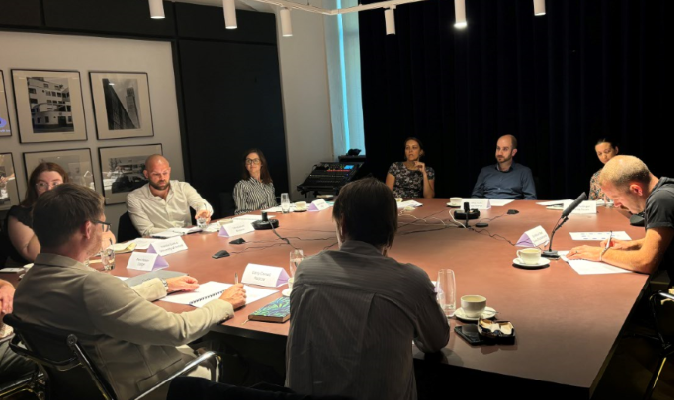
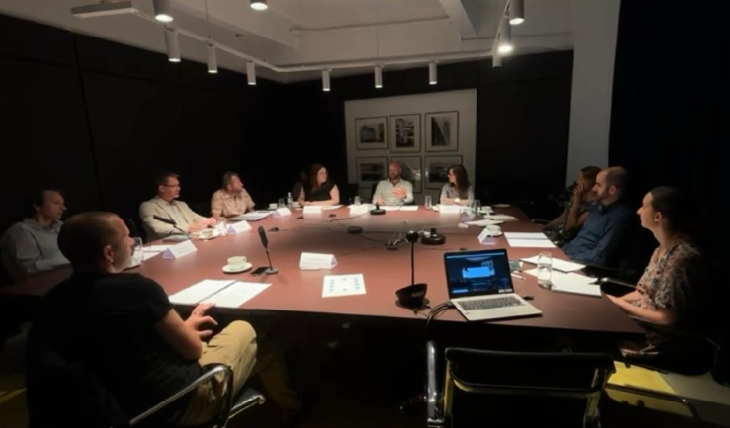
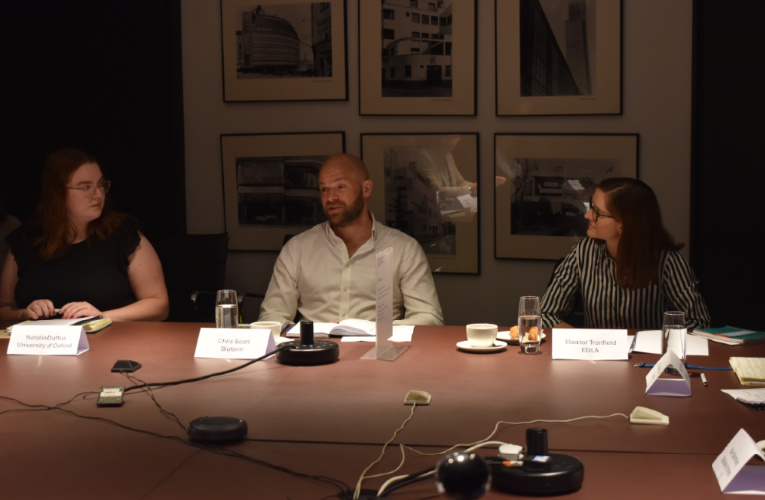
Photo credit: Tailored Round Tables
In the face of the intersecting crises of housing, biodiversity, and climate change challenges, natural environment professionals are driven to maximise the impact of their work.
With this in mind, the second of EDLA’s Kent-focused BNG in Practice Roundtable, in collaboration with Design South East, took place this morning with intense and productive conversations.
As professionals from private practice, public sector, and charity sectors, our goal is to move beyond a metrics-based approach and gain a deeper understanding of how to implement BNG for maximum impact in new development schemes. Our conversations will continue regularly to share experiences and best practices. Thank you to everyone for a lively conversation this morning.
Click here to read more about our Recommendations on BNG In Practice after 6 months in effect.
On 8th July 2024, EDLA sponsored and hosted a roundtable discussion in Canterbury, facilitated by Design South East. This event brought together natural environment professionals from the public, private, and charity sectors working across Kent and Medway to reflect on the practical implementation of Biodiversity Net Gain (BNG) metric and its effectiveness in delivering positive outcomes for both nature and people.
The BNG Metric is largely fit for purpose and there are best practice examples of it in use. However, applying the Metric without considering other important landscape, tree and ecology considerations can lead to inappropriate outcomes for ecology and people, and reduced ambition in landscape design. In some development projects, meeting the 10% BNG threshold has meant restricting people from habitats, reducing opportunities for recreation and nature connection, contrary to best practice in landscape design. Local Plans and development industry practices have not all caught up with BNG requirements, sometimes leading to viability challenges and sub-optimal outcomes for BNG.
The roundtable concluded with a comprehensive set of recommendations aimed at improving the BNG Metric guidance and its application on development sites. These recommendations are designed to maximise the potential of this important tool, ensuring it contributes meaningfully to both ecological sustainability and quality of life.
Our key recommendations (provided below) focus on:
(Photo by S N Pattenden on Unsplash)
EDLA sponsored and hosted a roundtable discussion on the BNG Metric facilitated by Design South East.
The roundtable was initiated by Director Eleanor Trenfield, following her presentation at the Kent Design Conference, where she advocated for a deeper understanding beyond mere metrics to ensure long-term impact and better quality of design for both residents and wildlife. She highlighted some of the unintended consequences emerging through the BNG Metric:
– Favouring simpler habitats
– Fencing off high condition habitats
– Disconnecting people from nature
– Encroaching on essential features like drainage basins
– Viability challenges for smaller developments
The conference presentation sparked interesting debate and a clear realisation that we need to do more to facilitate understanding and collaborative thinking on a wider strategic level.
Off the back of this, EDLA and DSE have brought together a collaborative group of Kent -focused natural environment professionals from the public, private, and charity sectors working in Kent and Medway to reflect on how the Metric is working in practice and its effectiveness in delivering positive outcomes for nature and people.
The insightful discussions and experience-sharing concluded with an initial set of recommendations for improving the BNG Metric and its real-life applications. This will help maximise the potential of this important tool, moving beyond ‘design by spreadsheet’ to a landscape and design-led approach.
Our next steps will be publishing the recommendations, for us to use as discussion points with Natural England/DEFRA on the use of the Metric to achieve successful development, landscape design, and habitat outcomes. The roundtable will reconvene in the coming months for further knowledge sharing and discussions.
We would like to thank all who contributed.
Update: Recommendations to Improve the Use of Biodiversity Net Gain in Practice have been published and shared with the Landscape Institute and Natural England.
Good landscape design is not just about creating visually appealing spaces for developments—it’s a collaborative process aimed at fostering resilience and promoting harmony between people and nature.
The Biodiversity Net Gain (BNG) legislation is a strong nudge towards creating rich and varied habitats within our built environment. While some UK developers have been future proofing for the expected BNG regulations for years, with the mandatory 10% BNG requirement as of 12 February 2024, now every development MUST demonstrate biodiversity gain, where richer and more varied habitats must be weaved into projects.
Landscape architecture plays a multifaceted role in achieving this, encompassing a thorough understanding of a site’s environmental complexities, its diverse ecosystems, and responding with innovative solutions to create places where both people and nature thrive.
At EDLA, we have been working closely with our clients and ecologists to not only retain existing biodiversity but also enhance and create new habitats, maximising space for people and nature to coexist in a sustainable way.
Here are 10 of our top tips to achieve BNG requirements for developers:
There are numerous stakeholders to each development project, with BNG in full effect, ecologists bring crucial insights to the table, and we recommend allowing sufficient time and budget within projects to allow for landscape architects and ecologists to work together to undertake early stage scenario testing.
Before embarking on design, conduct thorough ecology and habitat surveys to establish a foundation for informed decision-making. Baseline surveys are critical to understand the existing conditions of a site before any development begins. They provide valuable insights into the site’s ecological features, habitat types, vegetation, topography, and existing land uses. These surveys help identify important ecological resources, ensure compliance with regulations, assess environmental risks, and establish a baseline for monitoring and evaluation. By documenting the site’s current conditions, ecologists and landscape architects can make informed design decisions, protect valuable resources, and track changes over time to achieve sustainable outcomes for development projects.
If you are taking the route of an Outline Application, it’s essential to be mindful of the details that will need to be considered later on. By laying a strong foundation at this stage, you can streamline the planning process and ensure that key considerations are addressed effectively as the project progresses through detailed design, avoiding proposing parameters and habitats that may not actually be feasible.
Recognise that achieving BNG is an iterative process. Work closely with landscape architects and ecologists to streamline workflows and allow for sufficient time in the project programme to test different options and ideas.
Selecting an ecologist based on their experience and skills is a crucial step. Work with ecologists that intimately understand the Metric and have a wealth of experience, whilst their fees may be higher, their expertise will save you time and expense in the long run.
Be prepared to navigate the complexities that may arise between visual mitigation, landscape character enhancement, and green infrastructure design. Embrace these diverse considerations as opportunities for innovation and growth.
BNG is a journey, not a roadside attraction. Landowners are legally responsible for creating or enhancing habitat and managing that habitat for at least 30 years. Work with your landscape architects and ecologists to develop robust management plans to sustain biodiversity enhancements over a minimum of 30 years.
Integrate climate-resilient green infrastructure to create interconnected networks that benefit both wildlife and communities, fostering a deeper connection to nature.
Ensure that what is being proposed within planting plans is widely available, and that the sizes that are being proposed can be sourced in a practical manner. Mature tree stock with large canopies may offer more points within the Metric, but they are logistically challenging to transport to high density urban site locations and are at much higher risk of failure than trees which are younger.
Involve local communities in the development process to garner support and enhance awareness about the significance of biodiversity. Organize workshops, or public forums to foster a sense of ownership and responsibility towards biodiversity conservation. By engaging with stakeholders, including residents, schools, and community groups, you can build a collective commitment to nurturing and protecting biodiversity within the development project and its surrounding areas.
Biodiversity Net Gain offers a transformative opportunity to create landscapes where both people and nature thrive. As EDLA landscape architects, we stand as an experienced partner to create viable projects that contribute to a more sustainable and biodiverse future for generations to come.
Ready to start creating sustainable and biodiverse landscapes for your development projects?
Contact us today to discuss how our experienced team at EDLA can help you achieve your Biodiversity Net Gain goals and bring your project to life!
By Eleanor Trenfield
Founder and Director, EDLA Landscape Architects
Achieving 10% Biodiversity Net Gain within development became mandatory on the 12th of February, however this is not a new concept to the industry, and many of our clients have been working towards this (and in some cases a self-imposed 20% BNG) for years. So, we offer extensive experience to draw from, working closely with the ecologist and client.
Biodiversity Net Gain offers a transformative opportunity to create landscapes where both people and nature thrive. It is an environmental game changer, or at least it has the potential to be. The notion is simple; retain existing habitats as far as possible, enhance, and / or create new habitats so that overall, there is a net improvement to biodiversity of 10%. We fully support the concept of BNG, however, the Metric in its current iteration is highly complex and resulting in some questionable outcomes. It is also penalising ambition. It is calculated through a comprehensive spreadsheet, requiring inputs from experienced and competent ecologists.
So how do landscape architects fit into this?
Good landscape design is not just about creating visually appealing spaces for developments—it’s a collaborative process aimed at fostering resilience and promoting harmony between people and nature.
As landscape architects, we stand as an experienced partner to create viable projects that contribute to a more sustainable and biodiverse future for generations to come. We model scenarios with the ecologist, inputting at an early stage into the appropriateness (or not) of particular habitats from a design and placemaking perspective, and ensuring that the required areas are accommodated into the design. We also create or input into the Landscape and Biodiversity Management Plans (the management period required is 30 years).
BNG is adding to the myriad of uncertainties and complexities in projects, and our team is attending conferences and seminars regularly to discuss the many questions are clients and design teams are faced with. Natural England recently said in a seminar we attended that ‘BNG should be used to guide to design, not dictate design’, but is this a realistic position if it is a mandatory requirement in Planning?
We are seeing that strategic and larger sites are achieving BNG relatively easily in many cases, however, smaller sites (under 50 units) are finding this far more challenging. The smaller sites are also unlikely to have allocated budgets to do the early scenario testing that we would recommend. Developers are increasingly looking to land banks which add to the costs of a scheme significantly, and may not have been factored in when looking into viabilities, or they are being advised to reduce unit numbers, which may also result in the scheme becoming unviable.
Where BNG is being incorporated on site, there is an obvious pressure to achieve maximum points, where we see some (not all) ecologists proposing habitats that would be inappropriate for the location, or equally unfortunate, fencing them off to achieve maximum condition, effectively preventing people from accessing the landscape and interacting with nature within these habitats. ‘Irreplaceable habitats’ such as Ancient Woodlands which could benefit from long term management as part of a planning application are being excluded from red line boundaries as it is too difficult to achieve 10% BNG within an irreplaceable habitat, despite the significant obvious benefits to nature that a long term management plan would bring. Many of the ecologists we are working with are equally frustrated that design quality is being reduced to a paint by numbers approach where the most appropriate habitats are not the ones that score highest. And we are seeing a tension between what would achieve maximum points from a BNG perspective, versus what would be appropriate from a landscape / visual mitigation perspective / green infrastructure planning. For example the project may benefit from a new area of woodland for visual mitigation, however in order to achieve BNG, the area is required to be categorised as grassland with scattered trees, which may not suitably address visual impact.
Despite the frustrations we have with the Metric tool in these early days, we are in no doubt that Biodiversity Net Gain will be immensely positive and transformative for our industry and the landscape. We just need to iron out some of the glitches in the Metric…
To aid our clients, we have put together 10 Top Tips for Harnessing Landscape Architecture in Development Projects. From cultivating collaboration between ecologists and landscape architects to championing connectivity and community engagement, our top tips offer practical guidance for developers seeking to enhance biodiversity within their projects.
Please do get in touch if you would like to discuss your proposals.
Next Page »