We'd be interested to hear about your projects and ideas, do get in touch.
 ETLA Home Page
ETLA Home Page
ETLA Home Page
Walking through Ebbsfleet on our recent study tour and picking up the community engagement flyers at the train station reminded us of the landscape competition entry we submitted back in 2019. Our entry focused on how a series of events could bring together and engage a very broad residents group, and connect the new residents moving into Ebbsfleet with the history of Ebbsfleet and the existing communities at Northfleet.
Our proposal was not a conclusion, nor a final resolution. We resisted a grand design. Instead, our intention was to reframe Ebbsfleet and its identity for the new and existing communities and encourage residents explore and value this unique place. ‘The Ebbsfleet Agenda’.
The Ebbsfleet Agenda is a framework of ideas to foster belonging, physical and mental health and wellbeing and community cohesion between Ebbsfleet, Northfleet and Swanscombe, which could be tailored and evolve. The Ebbsfleet Agenda takes into consideration the likely rapid state of change within Ebbsfleet as development progresses, the aspirations of Ebbsfleet as a Garden City and Healthy New Town, the wildlife, the infrastructure, the vastness of the landscape and the needs of existing and new communities.
We proposed a social enterprise food production scheme and an annual programme of events weaving through the landscape connecting the three communities. The programme (titled ‘Your Ebbsfleet’) would be delivered to every household within the three communities, inviting participation for all. Each event within the programme is beautifully illustrated to engage residents and their children and whilst the language is deliberately light-hearted and fun its underlying intentions are ambitious; to encourage a sense of combined community, identity and pride for this unique place.
5 years on…
It is fantastic to see that the Community Engagement Team is thriving and organising all sorts of fun and engaging events, ultimately fostering a sense of pride in this new town and helping people to meet their neighbours and partake in creative activities that will make a lasting impact on Ebbsfleet.
If you’re interested in seeing some of the ideas we put forward, here is a link to the entry… Our Competition Entry
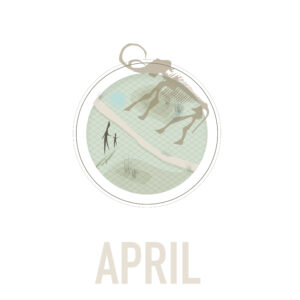
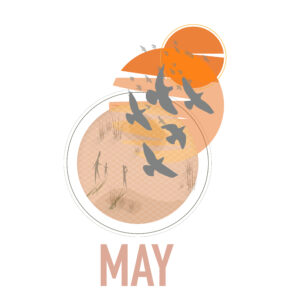
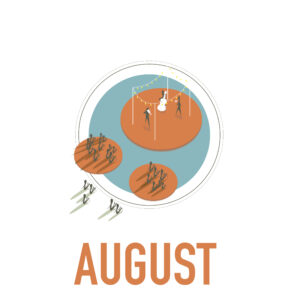
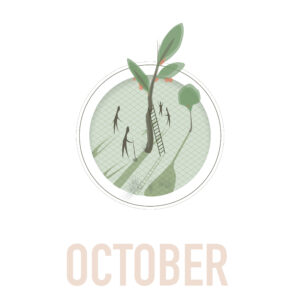
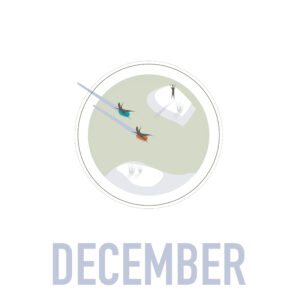
Our community activity diary included thoughtful and playful events every month intrinsically connected to Ebbsfleet and discovering the landscape.

We’re thrilled to announce that both our team and collective – urban strategies have achieved yet another notable milestone with Orchard Farm – being shortlisted for a prestigious Landscape Institute award. This recognition comes in the ‘Excellence in Masterplanning and Urban Design’ category for the year 2023. And swiftly after winning a World Landscape Architecture Award, which you can read more about here.
We’re extremely proud to be recognised as a finalist among the top entries, and by our Professional Body.
Orchard Farm stands as a remarkable venture, pioneering Kent’s inaugural sustainable self-build community. We were commissioned to spearhead the landscape design and provide strategic guidance. It is an inspiring development, with an authentic landscape-first approach embedded within the project ethos
We extend our gratitude to our clients Steenvlinder and Orchard Farm Kent, our exceptional team, and our valued collaborators – Hone Ecology, Barterhill Partnership, Marian Cameron Consultants, and WyrdTree (CGI visuals) for their exceptional visualizations.
Awards symbolise a celebration of our dedication and accomplishments. However, what often remains unseen are the extra hours and late nights dedicated to preparing award submissions amidst our demanding work schedules – hitting ‘send’ just before midnight on those tight deadlines. A special thank you is due to our incredible team, with particular mention to Donald Roberts and Jayashree Wighe, who have gone above and beyond. Here’s hoping that all those late nights and added effort will prove worthwhile! We eagerly await the announcement of the winners in all categories, set to take place in November.
Below is the complete roster of the shortlisted entries.
Three of our landscape architects Michael, Sharanya and Kate attended the Kent Design Urban Design School masterclass this week organised by Design South East, collaborating with a range of architects, masterplanners, developers, planning consultants and planning officers.
Great networking, fun and stimulating discussion and a rare opportunity to debate the different points of view (and of course challenges) from different professional perspectives.
A big thank you to Design South East for running the session.
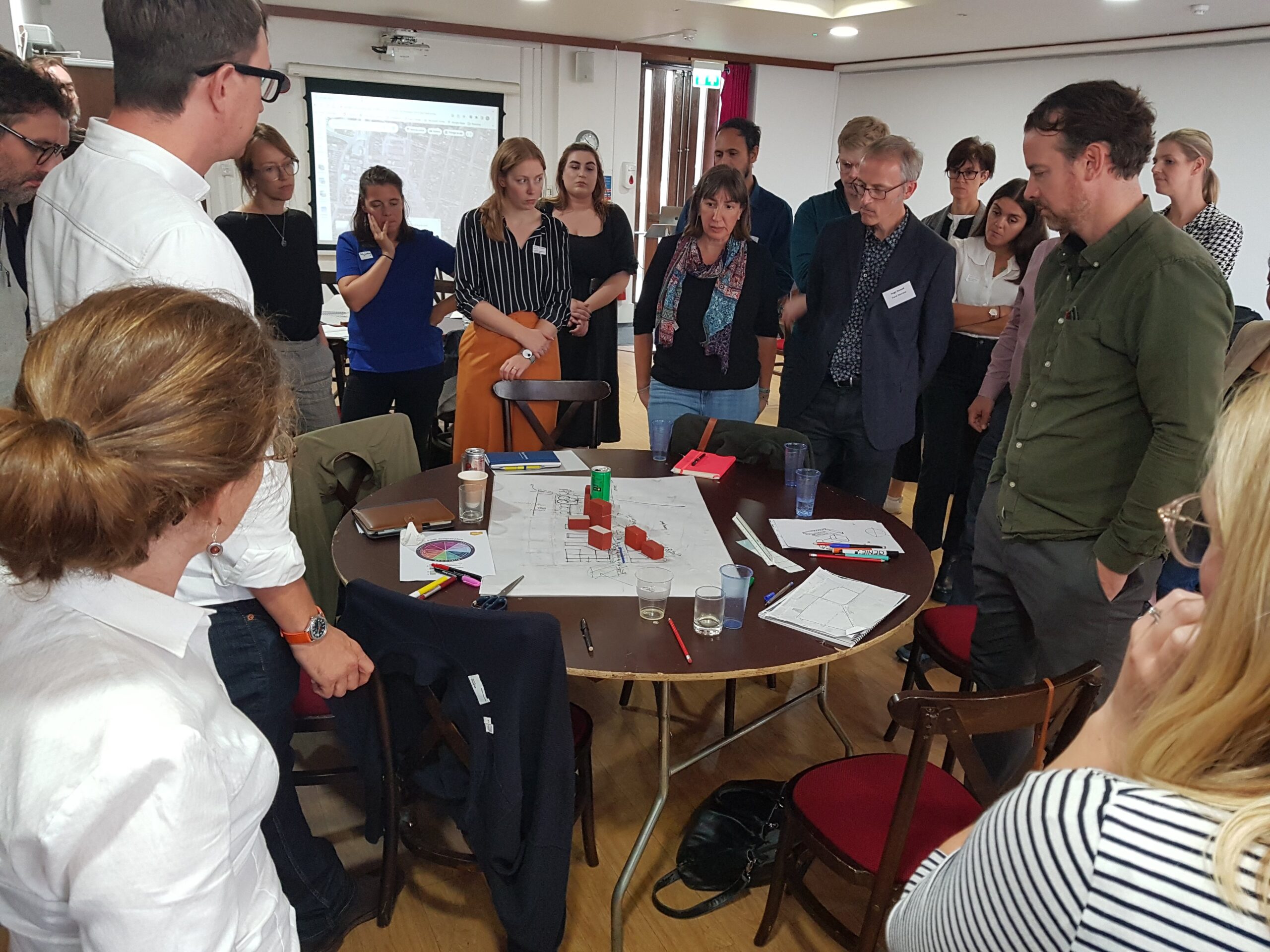
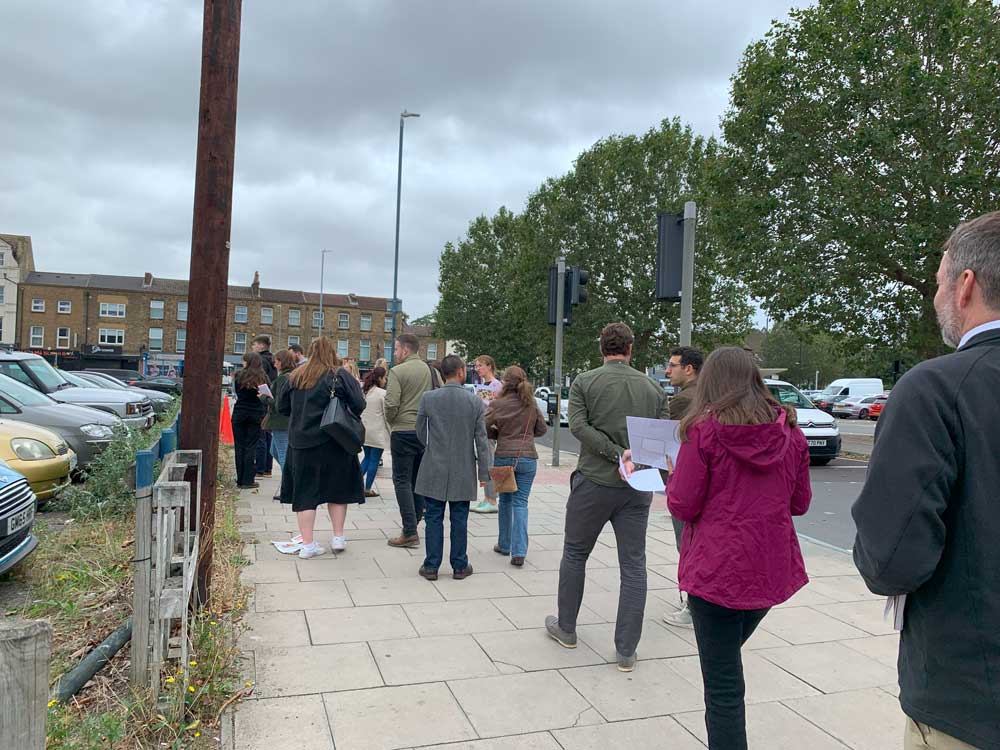
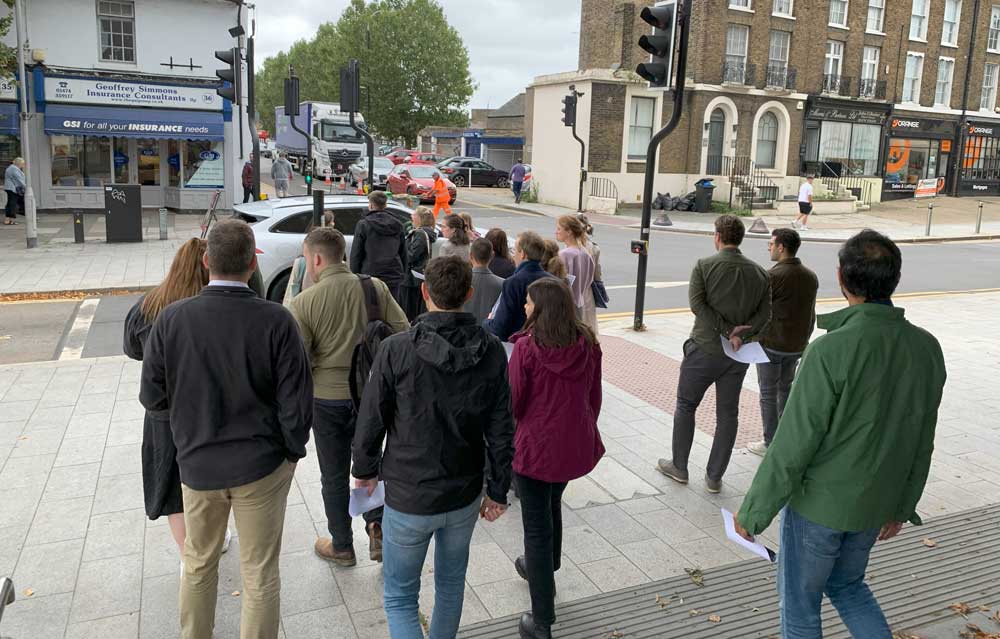
Over the past few months, EDLA have been getting numerous requests to give CPDs to practices, specifically relating to LVIA. So we have created one specifically for architects and planning consultants.
Within the LVIA CPDs, we discuss the process, and talk through a couple of case studies. LVIA is often described as a ‘dark art’ but it isn’t. In the CPD, we will demonstrate the benefit of involving landscape architects early in the development process (whether us or another). We can advise strategically on mitigation, sensitivity of different parts of the site, capacity and building heights (where relevant) from the outset so that time and resources are not wasted in the longer term.
The fact that 90% of our projects gain planning approval demonstrates that an LVIA – evidence based approach is of value. (Of course, we can’t take all the credit for this high success rate as we work within strong teams and with clients who value our work and bring us in early.)
If a CPD on LVIA would be of interest to you and your team, do get in touch. We are very happy to spend the time explaining the process and its value.
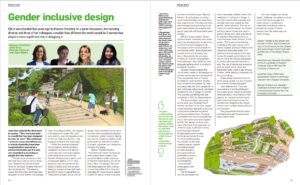
In a recent edition of the Journal for the Landscape Institute, the EDLA team was asked to discuss how gender influences design. The full article is extracted below or the link to the excellent full edition here (Our article is on pages 60-61).
Article begins:
Jade Goto opened the discussion by saying, “I live, work and exist in a world that has been designed by men, for men.” She continued, “women’s voices and differences in female physicality have been marginalised or ignored by a patriarchal society and it is only very recently it is occurring to people that this matters.”
”Perhaps more shocking is that this male bias is still at work in all our lives. Research by Caroline Criado Perez for her book ‘Invisible Women‘ [1] demonstrates this. The research shows that the entire world has been designed to work best for the average male. According to Perez, this happens in all aspects of modern life. Until very recently, even the regulatory size for the car crash test dummy….was designed to best fit the male body.’
Whilst the panel emphasised this complexity, simple solutions suggested included more lighting, more open and community spaces, and wider pavements and avenues. Smarter infrastructure in parks, such as adequate lighting, CCTV, clear sightlines, plus the position of the toilets, multiple exits, and an open feeling to prevent entrapment were also felt to make a huge difference. These are examples, and as with all design, there should be some care in the way these principles are applied: for example, greater levels of lighting can have an impact on wildlife, wider pavements can alter the character of streets, sightlines can change the intimacy of space.
“I live, work and exist in a world that has been designed by men, for men”
Eleanor Trenfield explains, “from their early teens, females are often inadvertently made to feel uncomfortable in public spaces or to feel that these spaces are not for them. Take, for example, the work that Make Space for Girls is doing to raise the profile of this issue and campaign for more inclusive design in parks for teens, where most play provision is aimed at boys. Take the Fields in Trust Guidance, on which most local authorities now base their play requirements. This does not even acknowledge that boys and girls use open space differently and proposes sports uses that will be primarily used by boys”.
EDLA’s current project, Oxted Quarry, Surrey, illustrates how public realm can be designed in a way that is welcoming and engaging to all. The project which would provide 75 new homes and 57 acres of parkland created within a lime quarry, has been influenced by the principles of safety for women and proposes wide pathways, clear sightlines, and adequate lighting which is mindful of ecological concerns.
Georgia Timpson argues that “public realm needs to be designed so women can be seen but not watched”. This may take the form of ‘natural surveillance, such as street vendors, other residents and passers-by. High boundary walls that block people off, or dark unlit areas without exits, ultimately increase the risk of danger to women. This was also something that was considered in EDLA’s Oxted scheme.
The second aspect discussed by the panel was the belief that if women had been at the helm, space would have been designed to be more conducive to collective social and community experiences. The panel considered how women typically lean into each other and bond together and felt that design could be used more effectively to bring people out of their houses, build communities and encourage cohesion. Simple ideas recommended by the group include the use of a circular seating design that creates central open meeting spaces, spaces with natural shade for baby changing, and spaces that are accessible to prams as well as people with disabilities – automatically encouraging more inclusivity.
The third aspect that the participants felt would have been different was the celebration of softness in design. It was felt currently that angularity and strength was more respected than gentler, softer solutions. This has an impact on both the design for children and how nature is seen and used in space-making; both are rarely considered. An approach that tackles this is Commissioners Road, Strood. In this project, EDLA was commissioned to design public open space, with a wealth of green and blue infrastructure including creative play areas. The scheme connects nature to the new homes for people and children in the area by using the existing topography to create a site-specific response to play. The use of natural play elements such as wood, stone, sand, and plants also foster creative play among children, while blending cohesively into the surroundings.
“Women typically lean into to each other and bond together”
These design elements not only serve young people but also increase the scheme’s biodiversity gains.
Jade believes that ‘if women were present in all the professions that create space, nature would have historically been much higher on the agenda. As I believe women would have more instinctively known the benefits that integrating the natural environment in public spaces offers to communities”.
The group ended the discussion considering the part that education plays. Eleanor said:
“Until we change how we are taught, challenge the syllabus, and do much more to encourage and retain women in professions historically considered ‘male’ to broaden the range of voices present, then the status quo will never change.”

‘It is said that in wine there is truth’, (In vino veritas), and it seems fitting that during English Wine Week, taking place until Sunday (26 June), we raise a glass and discuss the impact of this dynamic and exciting new UK industry on our landscape.
Viticulture, the growing of grapevines, is an expanding market within UK crop production. According to the National Association for British and Welsh Wine Industry, there are over 700 vineyards (of which about 540 are commercial) ranging in size from small plots to large well-known wine producers. In total there are over 160 wineries producing world-class internationally award-winning sparkling, white, rose, and red wines.
A huge proportion of these are located in Sussex and Kent due to the chalky soil conditions and in recent times much warmer weather, which offers a good environment for grape growing. This is evolving our agricultural landscapes in a really interesting way, evolving from crops and grazing land that may offer more in the way of food security, to something that has more appeal, profile, and profit-making potential, particularly when aligned with the tourism aspects that viticulture can offer.
But it’s a tough industry that favours the brave, with annual success or failure heavily connected to the weather. But clearly a very successful industry with many high-profile new vineyards coming forward including one by Taittinger outside of the village of Chilham, a few miles from our Canterbury studio.
However, Viticulture has been accused of not doing enough to minimise carbon pollution and offset its emissions. Renowned viticulturalist Richard Smart poses this question in his article ‘Are Winemakers Environmental vandals?’ And as the National Farmers Union has set a net-zero goal for UK farming by 2040, what is the industry doing to minimise its impact?
EDLA colleagues Jade Goto, Georgia Timpson, and Eleanor Trenfield discuss the changing nature of our agricultural land and offer ideas for how we mitigate the environmental consequences of these new crops.
Our backgrounds and experience
Living in Kent and the Sussex Downs the emergence of high-quality vineyards in our surrounding areas is something we have observed with professional interest. In 2019, Jade undertook an extensive course at Plumpton College on the Principles of Vine Growing, to expand her theoretical and practical knowledge of Viticulture and also to gain a better understanding of the changes that she was witnessing across the landscape.
Because of the location of EDLA, much of the team’s understanding of Viticulture has come through observation of the surrounding landscape, including within The South Downs National Park (SDNP). The SDNP currently holds the largest percentage of vineyards in the UK, due to its soil, aspect, and climatic makeup. It is also one of the most sensitive landscapes, of the highest national designation in policy terms, so how the tensions are managed here is interesting to observe.
Living in Kent and the Sussex Downs the emergence of high-quality vineyards in our surrounding areas is something we have observed with professional interest.
Jade’s study coincided with a project that EDLA was engaged in, which combined the design of a small vineyard to be used as an educational resource as part of a wine importer’s new headquarters in Ashford (‘The Vinorium’).
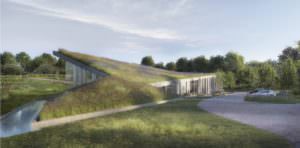
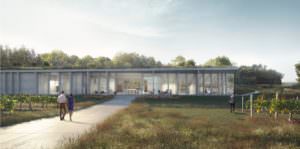
The Vinorium proposed Concepts (Courtesy of Holloway Studios)
Our aim at EDLA is to support new vineyard projects from inception, so that we can advise on landscape sensitivities regarding the developments as a whole, collaborating with specialist viticulturists, to create schemes that will be optimal for the growers and producers, whilst having a positive impact, environmentally and visually, on the surrounding landscape, and support the thriving of our landscapes into the future.
How has Viticulture changed our landscape?
Historically, the South Downs and Kent landscapes have been farmed. The animals grazed and the crops grown have changed over time and this, in turn, has shaped the landscape. Both geographical and socio-economic aspects have influenced what and how humans have chosen to farm in this area and this point in history is no different. Climate change has seen temperatures rise and today’s agricultural industry has responded to this by adapting the crops that are grown.
Vineyards themselves do not physically appear to be very different to other forms of fruit production, however, it is the associated recreational aspects and income streams associated with the vineyards that will have a greater impact on how our landscapes are perceived and experienced. They also provide various employment opportunities, from picking to more skilled tourism-related employment.
In recent years, Viticulture has grown significantly. A 2021 research piece, undertaken by Vinescapes, estimated the scale of growth at a ‘90% increase in vineyard coverage in the South Downs National Park since 2016, with approximately five new vineyards planted every year.
“Climate change has seen temperatures rise and today’s agricultural industry has responded to this by adapting the crops that are grown.”
At this rate, the prediction is that the UK wine industry will continue to increase rapidly, with up to 34% of the South Downs National Park being suitable land for the growing of grapes. This is not confined to Sussex. Viticulture is one of the fastest-growing areas of agriculture across the UK.
The reason that the UK has not historically been a serious contender in the global wine industry, is that in the past is that the conditions for vine growing were not favourable. With increasing temperatures, the South Downs and parts of Kent now offer a similar growing climate to Champagne, which is ideal for sparkling wines.
With the recent news that Sussex wines have just been awarded protected status, joining Champagne and Burgundy, The South Downs is set to become an even bigger huge player on the Viticultural stage.
What is the bigger picture environmental impact of the growth of viticulture?
Viticulture has many of the same environmental impacts as any large-scale agronomical production. The creation of a vineyard still requires the removal of existing vegetation, and the implementation of a carefully controlled monoculture which is often maintained using a wide variety of pesticides, insecticides and fungicides. If you have ever seen a landscape dominated by vineyards, you will know how much physical alteration must go into the landscape in order to facilitate successful vine growth. Terraces into hillsides, drainage channels into valleys.
There is also the CO2 released into the air from fermentation to be accounted for, a study that looked at the strength of carbon emissions created during the wine fermentation found that a litre of juice produces 60 litres of carbon dioxide. Leading the study was Roger B. Boulton, a Professor in Chemical Engineering and Viticulture. He said, “As a winemaker, if you want to be a serious leader in sustainability then you have to capture your carbon emissions – a good way to do this is to turn it into chalk,”.
He goes on to cite that Spanish wine giant Torres has led the way in developing technology that successfully captures and transforms the carbon dioxide created during fermentation via its CCR (Carbon Capture and Reuse) programme.
Biodynamic viticulture considers the ecosystem surrounding the vineyard. Lunar cycles, soil health, biodiversity and natural pest control are all cornerstones of the biodynamic method.
Despite the challenges, there are some fantastic methods of growing grapes for wine that are becoming more popular. However, this is understandably a niche decision that does not have large-scale commercial traction, given that the margins between success and failure of a harvest can be so slim.
Biodynamic viticulture considers the ecosystem surrounding the vineyard. Lunar cycles, soil health, biodiversity and natural pest control are all cornerstones of the biodynamic method. Livestock are used to manage weeds, and grassland around the vines and provide natural fertilizer; the lunar cycle dictates the growth and harvest cycle rather than the demands of the grower. Space is given for wild growth, and irrigation is kept to a minimum.
With any form of agriculture, there has to be an ongoing awareness and understanding of how our use of the land can have a negative impact on the natural environment. Wildlife habitats, the soil and the water courses need protection.
This needs to be a major part of the design process and the thinking behind any new venture. This high-level awareness of ecological factors then needs to continue into the future management and maintenance of these developments.
Overall, outside of climate consequences, the negative impacts of viticulture are the same as any other agriculture practice that creates a monoculture that is overly managed.
What landscape factors need to be considered in the selection of sites and production?
An understanding of the specific site, its constraints and opportunities and the landscape character is essential, as is an in-depth look at the potential economic investment and rewards. The quality of a wine will depend on the site, climate, vine and rootstock variety and viticultural practices. The most crucial decisions when creating a Vineyard include where and what you plant.
The microclimate of a site is assessed on temperature, frost risk, sunshine and rainfall. Site-specific influences on vine growth are the aspect, altitude, topography, wind exposure, surrounding landscape features and the soil. But temperature is the most principal factor in cool climate viticulture and the site will ideally fall within the upper and lower temperature range of 10-20c. The temperature of a site will influence the species chosen.
The climate of a site is evaluated on three levels; Macroclimate, that of region or country; Mesoclimate, that of area or field and Microclimate, the space immediately around the plants’ leaf canopy.
Frost can be managed passively, before the risk of frost to prevent damage or actively, during a frost. Passive management can include low-risk site selection, cold air drainage, a later budding cultivar of vine and pruning height. Active frost protection includes wind fans and electric cables.
The quality of a wine will depend on the site, climate, vine and rootstock variety, and viticultural practices. The most crucial decisions when creating a Vineyard include where and what you plant.
Sunshine hours will affect the growth success of Vitis vinifera and the ideal aspect for slopes is south-facing. 1250 hours of sunshine are required to ripen the fruit and sunshine hours decrease as you move away from the South coast, if the site is near to a large city or if the site is shaded.
The UK produces more rain than is required by the vines, so here drainage is more important than irrigation. This can be done by improving the soil structure and creating ditches and drains.
Wind protection is important, as a windbreak will improve the micro-climate temperature and reduce wind damage. However, it is important that the windbreak does not shade the plants or increase frost risk. If trees are being planted as a windbreak, they must be planted several years before the vines. Tree planting is also a good opportunity for wildlife corridors.
In 2021, the South Downs National Park Authority published a planning TAN (Technical Advice Note) to guide prospective vineyard developers on planning matters. This document outlines the wider context of vineyard development, rather than the site specifics. It states that Viticulture is both a form of farming and a new enterprise. The South Downs has always been a living, working landscape that supports local communities but one that needs to be protected from any adverse impact of a new industry.
The long-term outcomes for this particular area, focus on conserving and enhancing the landscape’s natural beauty and character, wildlife habitats, soil and water and tree management. The development of new vineyards needs to join up with these strategies. The thinking and planning from inception need to be aware and sensitive and if this is done correctly, hopefully, the adverse effects of viticulture will be minimised and the overall impact on the surrounding landscape and communities will be one that is beneficial.
What visual impact do vineries have on the landscape?
The vineyards that can now be seen as you drive through the countryside, are reminiscent of journeys through Europe. As well to the visual aspect, there is also the human and economic aspect. Conversations with people who work at, dine at, tour and buy from local vineyards have become a frequent part of daily life.
There are bigger considerations than just the vineries though, as many vineyards are also associated with visitor centres and tourism.
By the nature in which vines are grown, in upright rows, only about 20% of any vineyard floor is the vine plant. Traditionally, the land between the vines is grass or wildflowers. The vineyard alleys are a prime area for considered planting of wildflowers and grasses that will enhance biodiversity. In addition to these wildlife strips, hedges, trees and soil-enhancing planting are living elements that can be incorporated into the landscape design. Therefore, the soft visual aspect of the vineyards, if planted traditionally, can have a natural beauty.
The vineyards that can now be seen as you drive through the countryside, are reminiscent of journeys through Europe.
If the vines can be laid out in smaller, appropriately located areas, rather than dominating a landscape that may have experienced largescale field pattern loss, they can be designed to seamlessly merge with the surrounding landscape and maintain open vistas.
However, in terms of the infrastructure that is required for the winemaking process, visitor centres, accommodation etc; the site needs to be considered both contextually and holistically with a sympathetic, landscape-led approach to the positioning of the visitor facilities, roads and wine-making infrastructure. For each project, a specialist team needs to work closely together to create a sensitive thoughtful design that reduces the impact on the natural landscape.
When done well, these vineyards have the ability to bring in gentle tourism that connects people to the landscape, increases employment, educates and ideally works in tandem with the natural environment.
As long as there is a balanced and environmentally considered approach, we are sure that Dionysus, son of Zeus and the God of Wine, would join us in celebrating the growth of the UK wine industry and the transformation of the landscape around us.
We will drink to that! Cheers.
Wine Favourites of the Contributors:
Eleanor’s favourite tipple is Chapeldown’s English Rose, (it brings back happy memories of her wedding), Jade is partial to Wiston Estate Brut and Georgia’s go-to is grape is Barnesole Classic Reserve, as she grew up next to the vineyard.
Three women, all Owner/ Directors of Landscape Architectural practices, answer six questions about what it’s like to be a woman in this industry.
Interviewees:
Eleanor Trenfield (ET) is the Owner/ Director at EDLA
Wendy Lancaster (WL) is a Landscape Director at Tyler Grange
Catherine Xavier (CX) is the Owner/Director at Guarda Landscape
Q1
International Women’s Day calls for a gender-equal world. A world that is diverse, equitable, and inclusive. A world free of bias, stereotypes, and discrimination. The premise is that the world is not gender-equal. Is this right? What does this vision say to you?
ET: The world is not gender equal, but from my own experience, this is changing. I was brought up in the belief that I am no different in talent or ability than any man, and my parents encouraged me to achieve academically. This is a big shift from my mum’s experience just a generation ago, where her brothers were sent to university and she was sent to secretary school at 16 and encouraged to marry. I am not interested in being known as a female landscape architect, I am a Landscape Architect, full stop.
WL: Yes, I absolutely agree. Both women and men are subject to expectations on the way they should behave. The vision is where we should be, not just for gender, but for sexuality, race, and any other differences.
CX: I am the first generation where women have had the opportunity to choose jobs available to men and live a free and prosperous life without a man. Before there was complete gender bias, where men were the breadwinners and women stayed at home. My mum speaks about the lack of choice, sweeping assumptions and discrimination in every institution. Although women over 21 gained the right to vote in 1928, as late as the 1970s working women were refused mortgages because few were employed continuously. They were granted mortgages only if they could secure the signature of a male guarantor.
Equality has moved forward quickly since then and in the 30 years that I have been in the industry I have started to see women around the table, especially in architecture, planning, arboriculture and ecology and even engineering is seeing a surge in female representation. We are moving towards a more equitable world (or certainly the world that I inhabit), but we have some way to go before we can claim complete diversity. The same is also true of other minority groups and those who come from deprived backgrounds.
The vision is for everyone in the world to have choice and opportunity, regardless of who they are or where they come from. If they have a dream, they should have the opportunity to reach out and take it.
Q2
As a Director of a Landscape Practice, you are one of a small number of women in senior roles in our profession (outnumbered by more than double at senior level). What, if any, obstacles have you faced, and do you consider any of them were connected to you being a woman?
ET: I have been lucky to work in great practices gaining high-profile experience and a strong network. But it became obvious over time that the environment I was in was not supportive of more significant career growth. It was plain to see that men far outnumbered women in partnership roles and this culture can’t help but filter down throughout the business. Looking back, it was the most positive conclusion I could have come to, as I decided to be proactive and build a practice that reflected my values and aspirations.
WL: The expectations on how I should behave and how I should accept being treated, in ways that my male colleagues weren’t. I feel like I’ve been judged against a different set of criteria which has been hard to call out, and then there have been the straight-out instances of discrimination and harassment. I don’t believe I would have experienced those times as a man.
CX: It’s interesting because now I look around and I see a few women who own landscape architecture practices, including our current president, Jane Findlay. However, as I advanced my career back in the 1990’s and 2000’s, I didn’t even realise that I had the opportunity to set up my own practice. It seems ridiculous now looking back, but it just didn’t occur to me that it was an option.
This was due to the lack of role models at the time. Every practice owner seemed to be white and male, and from a well-educated background. I just didn’t fit that mould, being female, mixed-race, and from an inner-city comprehensive. Also, the careers advice being handed out in the 1980s was seriously lacking in ambition (more so for women?) and we were never taught about owning a business or being self-employed. I went to a career fair in London just before the pandemic and the students only wanted to know how to work for themselves. We have come a long way in the last few years.
I remained an employee until I reached my mid-40s and then I finally woke up to the fact that I could do it too, and maybe even better!
Q3.
An article by Romy Rawlings in the most recent LI Journal (attached) references findings from a blog by Robert Holden CMLI, she says, “There’s no problem attracting women into the profession. For salaries up to £50,000, the profession is pretty much at parity and younger women (particularly those without children) may well encounter no issues in the workplace. However, for those earning over £50,000, the situation declines and there is more than twice the number of men than women in this salary band”.
What are your views on this, why do you feel this is the case, and what do you feel are some of the remedies to address the lack of female senior representation?
ET: These issues are complex, and in many cases the data suggests that it is largely connected to a woman’s decision to have a family (not forgetting that there are obviously men involved in this decision too). More financial support with childcare to enable women to maintain their careers, and an acknowledgment within larger practices that a more balanced management board will result in a more balanced and positive business.
WL: There’s a cultural bias, in the way we network and do business. The majority of our clients and the other professions around the table, especially the more engineering and ‘nicely factual’ ones, are still dominated by men. We’re starting to see more women in the construction industry, especially the housebuilders, and more of these are in more senior positions. Creating environments where women can thrive, and supportive and positive practices around maternity leave, for example, positive examples from male and female leaders will all help to encourage women forward to the senior positions. This will reinforce the positive cycle.
CX: I don’t have children and so it is hard for me to comment personally on the Romy Rawlings article. However, taking time out of the profession is inevitably going to have an impact on career progression, for men and for women. If a couple chooses to have children, their priorities change, and parenting becomes a central focus in their lives.
The issue in the past has been that the woman has usually picked up a majority of this responsibility whilst the man is left to have a family and also progress his career at the same time. Society has to change to ensure that both parents take equal responsibility, which also benefits the children as they grow up close to both mother and father.
I also believe that subconscious bias is also another factor at play, i.e. hiring or promoting people that are just like you. I see this all the time and I am guilty of it too. We are naturally drawn to commonality or the familiar and it is basic human behaviour. This is why it is important for leaders to question their choices and even in some situations introduce temporary quotas to ensure that minorities have to be selected until there is some semblance of parity.
Q4.
Have you ever called out inequality or bias (unconscious or conscious)? Professionally or personally. Talk to this. If not, what do you see as one of the biggest issues in achieving a gender-equal society?
ET: Yes, I have called out bias and inequality but not as much as I should have as I was concerned that it would harm my career. I remember once raising something that really mattered to me personally about a situation at work, and it being brushed off because I was one of the ‘strawberry generation’, i.e. a sensitive female millennial who bruises easily. If you are brushed off when you raise something that matters to you, the chances are that you won’t raise it again. I have been put in extremely awkward positions in a forum of clients and consultants being asked when I am starting a family and ‘not to leave it too long’. And some have openly discussed women in their teams and their fertility. If I may give some advice here, this is not a subject area any woman is comfortable talking about within a professional environment.
WL: Absolutely, both in my earlier, pre-professional career and since I became a professional and, it’s been much harder. I found the more obvious sexism in my earlier careers easier to call out. The unconscious (and conscious) bias I’ve experienced in professional practice has been far more insidious. If I’d felt that there were women in senior roles who I could have gone to, I think the outcomes would have been very different.
CX: I am very aware of subconscious bias. For example, when I first set up the business I didn’t network with, or market to, a certain demographic because I realised that the likelihood of being taken seriously was low. I also enjoyed networking in London as there was greater diversity and so was more comfortable in this setting. I also met other female company owners and we worked united in our approach. All of this has become less pertinent now as the practice has developed an established reputation, although I am still sometimes greeted with surprise when I tell people that I am the only owner-director of the business.
Subconscious bias exists all the time and the only way to minimise its impact on diversity is to have diverse leadership.
Q5.
A new edition of Making Space (first published in 1984) comes with a new introduction from leading feminists that discuss the work’s conclusions that sexist assumptions on gender and sexuality have a fundamental impact on the way buildings are designed and our cities are planned. (Published by Verso in March 2022). Can you talk to this? Does this resonate with your practical experience?
ET: Given that our cities are predominantly governed, planned and designed by males who are from a similar background, I would suggest that it is not just a gender issue.
WL: Greater diversity in all aspects of design, whether it be Architectural, landscape or product, can only help understand the different needs that different groups have. A single group deciding what we all need isn’t going to result in those needs being fulfilled and can be dangerous. I recommend reading ‘Invisible Women’.
CX: I don’t think that gender is the problem. It is a lack of diversity and therefore narrow life experience which has stunted design in the past. We use our experiences to inform our thoughts, ideas and designs and if these are limited then the solutions will be limited. In my experience, the most successful designs are born out of collaboration. The greater the diversity in the team the better the result. Diversity of gender, age, background, health, ability, all bring together a wealth of experiences and therefore promotes true design inclusivity.
Q6.
As senior leaders in Landscape Architecture, what are you doing to #breakthebias? The hashtag and call to action for International Women’s Day?
ET: We foster an open culture in the practice, where people feel safe to raise ideas and issues that matter to them. We have started running networking events that offer something alternative to drinking culture and for those who cannot spare time in the evenings for more traditional networking events to be more inclusive for those with childcare commitments. We are a family-friendly practice and offer flexible working. We hire on talent, motivation and drive, not on gender.
WL: I’m trying to be better, to make sure I don’t perpetuate biases and assumptions about my team. One thing that resonates with me strongly is the way that women are treated before, during, and after their maternity leave. This has led me to consider how my male team members may experience similar or different issues around paternity leave. I want all my team members to feel empowered and supported, regardless of gender, sexual orientation, race or any other difference.
CX: I am proud to be a positive role model for women in the industry and promote female representation in leadership positions. I try to advocate this within GUARDA and also endorse this view through my dealings with our consultants and clients on a day-to-day basis.
I admit that I find it slightly frustrating when I see practices post pictures of their female team members on International Women’s Day when I know that all of their leadership/director positions are held by men. I hope that as the years pass this will change and we will see parity of men and women at the top. Maybe then we no longer will need an International Women’s Day.
Q6(a)
Any advice you would give your younger self / younger female professionals out there who are embarking on a career in Landscape Architecture?
CX: Don’t fall into the trap of thinking that you are not good enough. If you have the passion, desire and determination then you will be great. Surround yourself with mentors/advisors that you trust. Support is important and don’t be afraid to ask. So many people (men and women) genuinely want to help and see you do well.
You will never appeal to everyone and not everyone will like you or want to work with you. Don’t take it personally and just find out what works for you.
Also, starting a practice is a good option for a woman (and men), it is hard work but also offers control, flexibility and the beginning of many rewarding relationships.
ET: Find a mentor. Someone who will support you and help you to navigate the professional world. Preferably someone outside of the business you are in. There are great networks out there, such as Women in Planning which have a mentor training programme and connect mentors and mentees based on criteria. And it’s a personal decision and not an easy one, but if you feel able, speak out when things aren’t right.
WL: I wish I’d known about Landscape Planning as a career when I was doing my geography A levels; I got here by accident but it’s perfect for me. I’d say to all young women to trust your gut, you don’t need to put up with it or stay in a job where you’re not heard. There are great organisations in the industry, such as NAWIC, where you will find supportive and empowering women. We’re an industry short of people, we need to look after our colleagues.
The Landscape Institute is about to launch its latest sector survey which will include an analysis of gender balance and progress within the profession.